موضوعات
آموزش و پرورش
ادبیات و زبان
پزشکی، دندانپزشکی و داروسازی
تاریخ و جغرافیا
داستان و رمان
دیگر
دین و فلسفه
روانشناسی
ریاضیات و آمار
سلامتی، تناسب اندام و رژیم غذایی
شیمی و پلیمر
علوم اجتماعی و حقوق
علوم زیستی و بیوتکنولوژی
فیزیک و نجوم
کامپیوتر و اینترنت
کتابهای کودکان و داستان
کسب و کار و اقتصاد
کشاورزی و دامپزشکی و غذا
معماری
مهندسی و فناوری
هنر و تئاتر
محصولات
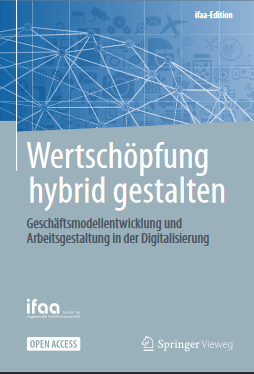
Wertschöpfung hybrid gestalten Geschäftsmodellentwicklung und Arbeitsgestaltung in der Digitalisierung - Original PDF
نویسندگان: خلاصه: V Vorwort Die fortschreitende vernetzte und intelligente Digitalisierung verändert bestehende Möglichkeiten und eröffnet neue Chancen, um Daten in Unternehmen wertschöpfend zu nutzen. Die daraus entstehenden Informationen können dazu beitragen, Kundinnen und Kunden innovative, datenbasierte Dienstleistungen zu bieten. Diese sogenannten Smart Services sind eine zusätzliche, hybride Wertschöpfung und helfen bspw. bei der Prozess- optimierung, Ressourceneinsparung und Planungseffizienz. In dem vom Bundesministerium für Bildung und Forschung geförderten Projekt „AnGeWaNt – Arbeit an geeichten Waagen für hybride Wiegeleistungen an Nutz- fahrzeugen“ wurde die Entwicklung und Gestaltung hybrider Wertschöpfung durch ein breites Konsortium aus Wissenschaft und Wirtschaft erforscht. Von 2019 bis 2022 wurden drei Anwendungsbetriebe bei der Entwicklung und Pilotierung hybrider Geschäftsmodelle unterstützt. Hybridisierung erfordert Digitalisierung und geht einher mit Veränderungen in der Arbeitsgestaltung in den Betrieben. Insbesondere Prozesse und organisatorische Strukturen können sich durch die Hybridisierung verändern, sodass überprüft werden sollte, ob derzeitige Führungsleitlinien sowie Zusammenarbeit und Kompetenzen zukunftsfähig sind. Darauf aufbauend dient eine ganzheitliche, sozio- technische Gestaltung, bei der die Bedarfe von Führungskräften und Beschäftigten sowie die Rahmenbedingungen des Betriebs berücksichtigt werden, als Basis für die erfolg- reiche Implementierung hybrider Geschäftsmodelle. Diese Buchpublikation soll Unternehmen und weiteren Institutionen die Vorgehens- weise zur Entwicklung von hybriden Geschäftsmodellen sowie ihrer Umsetzung im Betrieb aufzeigen. Eine soziotechnische Gestaltung hybrider Wertschöpfung sowie ein geeigneter Umgang mit Veränderungen, welche durch Digitalisierung und Hybridisierung entstehen, werden aufgezeigt. Die in diesem Werk vorgestellten Inhalte und Ergebnisse basieren auf den im Projekt AnGeWaNt gesammelten Erfahrungen und liefern Ihnen Hinweise und Methoden, mit denen eine Entwicklung, Umsetzung und Gestaltung hybrider Geschäftsmodelle unterstützt wi
The Language of God: A Scientist Presents Evidence for Belief - Epub + Converted PDF
نویسندگان: خلاصه: An instant bestseller from Templeton Prize–winning author Francis S. Collins, The Language of God provides the best argument for the integration of faith and logic since C.S. Lewis’s Mere Christianity. It has long been believed that science and faith cannot mingle. Faith rejects the rational, while science restricts us to a life with no meaning beyond the physical. It is an irreconcilable war between two polar-opposite ways of thinking and living. Written for believers, agnostics, and atheists alike, The Language of God provides a testament to the power of faith in the midst of suffering without faltering from its logical stride. Readers will be inspired by Collin’s personal story of struggling with doubt, as well as the many revelations of the wonder of God’s creation that will forever shape the way they view the world around them.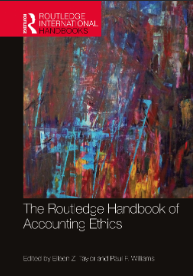
HE ROUTLEDGE HANDBOOK OF ACCOUNTING ETHICS - Original PDF
نویسندگان: خلاصه: 1 INTRODUCTION Eileen Z. Taylor and Paul F. Williams “Ethics” and “morals” are two terms about which there is ambiguity. Some scholars consider the terms to be synonymous. Others make a distinction that ethics pertains to right conduct vis-à-vis others, while morals pertains to one’s personal sense of right conduct; still others reverse that distinction. Philosophers tend to regard the distinction between “ethics” and “morals” to be that ethics pertains to a centuries-old conversation about how we decide what is good and bad, right and wrong, while morals is the content of good and bad, right and wrong. The perspective on “ethics” taken in this book is this latter sense; thus the title Companion to Accounting Ethics. The book’s purpose is not to be a handbook of accounting rights and wrongs but rather a collec- tion of conversations employed by educators to assist students of accounting to become more attuned to accounting’s ethical aspects and to become more critical thinkers about the ethical complexities of the function of accounting in human society. As a social science, accounting is the creation of people, for the purpose of accounting for transactions (generally monetary) between and among groups of people. Accounting does not exist without people, and its rules of the day are determined by people; it is mutable and wholly dependent on both the decisions made by people with economic power and acceptance of those decisions by those same people. Similarly, ethics are enacted by people, and the ethicality of an action is determined by the individual affected by the action, as well as by the collective societal acceptance or rejection of an action. Accounting, because it is people driven, inherently has an ethical component. Every deci- sion about how to account for a transaction at some point affects an individual, either directly or indirectly. For example, decisions about recording revenue affect those whose income is commission-based. Decisions about recording an expense affects taxes paid (and received by the government for the benefit of society). Our primary goal with this book is to call attention to the intersectionality of accounting and ethics and to encourage students and researchers to consider the ethical implications of accounting decisions
Silent Conflict A Hidden History of Early Soviet-Western Relations - Original PDF
نویسندگان: خلاصه: It is not easy to study the history of Soviet foreign policy or Soviet relations with the West. Until the beginning of the 1990s the Soviet archives were closed tight. After the collapse and dismemberment of the Soviet Union in 1991, the archives gradually opened, but only partially. Sometimes papers were opened only to be closed again. Russian archivists had tens of thou- sands of papki, or files, in their care and, not always knowing what was in them, were reluctant to open them to researchers. These include, inter alia, the important party archives for the inter-war years at Rossiiskii gosudarstven- nyi arkhiv sotsial’no-politicheskoi istorii (RGASPI) and the diplomatic papers of the Arkhiv vneshnei politiki Rossiiskoi Federatsii (AVPRF), the archives of the Russian foreign ministry. In AVPRF there were and are all sorts of dif- ficulties. Researchers have no access to inventories, so it’s like playing poker when asking archivists for files. Sometimes the files are rich, and you win, and sometimes not, and you lose. Computers were forbidden for a number of years, and photocopies were so costly as to make a new arrival gasp for air. You got used to the impediments and learned to function around them. The excitement of new discoveries and uncharted ground made you forget the numerous irritations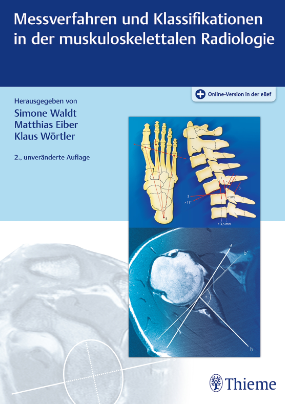
Messverfahren und Klassifikationen in der muskuloskelettalen Radiologie - Original PDF
نویسندگان: خلاصه: Vorwort „Die besten Bücher sind die, von denen jeder Leser meint, er hätte sie selbst machen können.“ Blaise Pascal, französischer Mathematiker, Physiker und Philosoph (1623–1662) In kaum einer Subdisziplin der klinischen Medizin findet man wohl eine solch verwirrende Vielzahl von Messver- fahren und Klassifikationssystemen wie in der orthopädi- schen Diagnostik. Ganz sicher aber sind es genug, um als Radiologe, Orthopäde oder Unfallchirurg nicht immer alle Methoden und Referenzwerte „im Kopf“ haben zu können. Dieses Problem ist, wie auch die Idee zu diesem Buch, nicht neu. Als ich während meiner Ausbildung an der Universität Münster begann, mich mit der orthopädischen Radiologie zu beschäftigen, existierte an unserem radiologischen Skelettarbeitsplatz als wichtiges Utensil ein Aktenordner, der als Loseblattsammlung Kopien aus unterschiedlichs- ten Lehrbüchern und Zeitschriften enthielt. Die von mei- nen Vorgängern zusammengetragenen Blätter fassten in ungeordneter Folge wichtige Messungen und Klassifika- tionen zusammen, die zwar mehr oder weniger häufig eingesetzt wurden, aber offensichtlich nur schwer in das Langzeitgedächtnis des jeweiligen Befunders zu überfüh- ren waren. Das im Laufe der Jahre durch Gebrauchsspuren recht unansehnlich gewordene Lehrwerk wurde von mei- nen damaligen Kollegen und mir schlicht der „Ordner“ genannt, als unverzichtbares Hilfsmittel angesehen, arg- wöhnisch gehütet und ständig um weitere Seiten und An- merkungen ergänzt. Eine ganz ähnliche Sammlung, allerdings in elektroni- scher Form, wurde später an der Technischen Universität München von Assistenzärzten des Skelettarbeitplatzes er- stellt. Diese erreichte zwar nach meinem persönlichen Empfinden nie den Charme des alten „Ordners“, hatte je- doch bezüglich Modernität, Ordnung und Verfügbarkeit und letztlich auch unter hygienischen Gesichtspunkten Vorteile. Außerdem stellt sie den direkten Vorläufer dieses Buches dar. In diesem Buch werden verschiedenste Messverfahren und Klassifikationssysteme aus allen Bereichen der mus- kuloskelettalen Radiologie mit Ausnahme der Frakturleh- re (damit ließe sich ein weiteres Buch füllen) dargestellt, ohne Anspruch auf Vollständigkeit zu erheben. Die Auto- ren haben versucht, nach Möglichkeit auf die Originalpu- blikationen zurückzugreifen, um Fehler durch inkorrekte „Überlieferung“ gebräuchlicher Methoden zu vermeiden. Neben der Erläuterung von Messverfahren und Klassifika- tionskriterien wurde der Versuch unternommen, den tat- sächlichen praktischen Stellenwert der einzelnen Metho- den zu beleuchten. Weitgehend veraltete Verfahren und Systeme wurden gar nicht oder nur mit entsprechenden Anmerkungen in die Sammlung aufgenommen.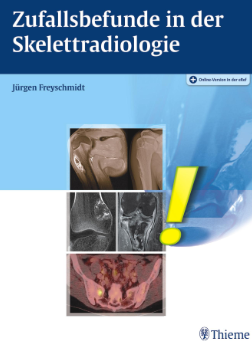
Zufallsbefunde in der Skelettradiologi - Original PDF
نویسندگان: خلاصه: Vorwort Die sich in der Radiologie schon längst etablierte und ständig weiter zunehmende Bilderflut sowie die Modalitäten und Erfolge der Krebstherapien mit ausgedehnten prätherapeutischen und langfristigen Nachsorgeuntersuchungen führen zwangsläufig zur Aufdeckung von immer mehr Zufalls- und Nebenbefunden, die vor allem dem Nichtspezialisten in der Skelettradiologie erhebli- che interpretatorische Probleme bereiten können. Doch wie geht man damit um? Sicherlich nicht, indem man die Bilderflut durch mehr oder weniger ungezielte zusätzliche Unter- suchungsverfahren ausweitet und damit unter Umständen neue Zufallsbefunde kreiert. Das gilt besonders für hoch sensitive aber weniger spezifische Modalitäten. Der anspruchsvolle und präzise Radiologe wird vielmehr ein ergänzendes Verfahren einsetzen, das – an der anatomischen Struktur des Zufallsbefunds orientiert – eine höhere Spezifität besitzt und zu einer begründeten und klinisch brauchbaren Diagnose führt. Der häufig angewendete Trick, sich der Verantwortung zu entziehen und eine histologi- sche Abklärung zu empfehlen, sollte gemieden werden. Denn die histologische Interpretation des Pathologen kann in der Skelett- radiologie nur so gut sein, wie der radiologische Befund klar und richtungsweisend ist. Ich betätige mich seit vielen Jahren als Konsiliarius in der Ske- lettradiologie. Das eingesandte Krankengut besteht zu etwa 50 % aus klinisch asymptomatischen Zufallsbefunden, hinter denen benigne Knochentumoren und tumorähnliche Läsionen, Erkran- kungen im Frühstadium, Teile einer systemischen Erkrankung, ungewöhnliche Normvarianten und vieles mehr stecken können. Es wird an mehr als 160 Fällen und fast 100 differenzialdiag- nostisch passenden Kasuistiken aufgezeigt, wie man professionell an solche Befunde unter Einbeziehung der individuellen Situation des Patienten herangeht, welche Relevanz sie haben und welche sinnvollen Empfehlungen man zum weiteren Prozedere geben kann. Mein Dank für die Überlassung der besonderen Fälle gilt den Kollegen CA Dr. med. Jürgen Wiens, Wolfsburg (Fall 22), Dr. med. Thomas Grieser, Augsburg (Fall 30), Professor Dr. med. Michael Laniado, Dresden (Fälle 34, 61), Privt.-Doz. Dr. Sönke Langner, Greifswald (Fall 45) und CA Dr. med. Nils H. Goecke, Wildes- hausen (Fall 131).
Radiologische Diagnostik Abdomen und Thorax - Original PDF
نویسندگان: خلاصه: Ultraschall, CT (Computertomografie) und MRT (Magnetreso- nanztomografie) sind die wichtigsten Modalitäten zur Unter- suchung der Kopf-Hals-Region. Gemäß den Leitlinien der Deut- schen Röntgengesellschaft (AG Kopf-Hals-Diagnostik) wird die MRT bei Verdacht auf suprahyoidale Tumoren aufgrund ihres gu- ten Weichteilkontrasts eingesetzt. Die CT kommt bei infrahyoidal gelegenen Tumoren zur Anwendung, da sie aufgrund der gerin- gen Untersuchungszeit im Vergleich zur MRT deutlich weniger artefaktanfällig ist. ●HMerke Bei der CT führt ein langes Zeitintervall nach Kontrastmittelinjek- tion (60–80 s) zur besseren Darstellung von Tumoren. Für die MRT ist gemäß den Empfehlungen der AG Kopf-Hals- Diagnostik der Deutschen Röntgengesellschaft die Durchführung mindestens folgender Sequenzen erforderlich: ● koronare fettunterdrückte T2w (T2-gewichtete) Sequenz (STIR [Short-Tau Inversion-Recovery]) mit einer Schichtdicke von 3–5 mm ● axiale T2w Sequenz mit Fettunterdrückung mit einer Schicht- dicke von 3–4 mm ● axiale und koronare native T1w (T1-gewichtete) SE-Sequenz (Spin-Echo-Sequenz) ohne Fettsättigung mit einer Schichtdicke von 3–4 mm ● axiale und koronare fettunterdrückte T1w SE-Sequenz nach i. v. (intravenöser) Kontrastmittelinjektion

GENERATIVE AI AND PROMPT BASIS RULES FOR BEGINNERS: How generative artificial intelligences like chatgpt work and the basic prompt rules for using them - Pdf
نویسندگان: خلاصه: GENERATIVE AI AND PROMPT BASIS RULES FOR BEGINNERS: How generative artificial intelligences like chatgpt work and the basic prompt rules for using them by Michael Gordon Cohenآیا کتاب مورد نظر هنوز بر روی سایت قرار نگرفته است؟ جای نگرانی نیست! کافی است بر روی گزینه سفارش کتاب کلیک کرده و درخواست خود را ثبت کنید. در کمتر از چند ساعت کتاب شما را آماده خواهیم کرد.