موضوعات
آموزش و پرورش
ادبیات و زبان
پزشکی، دندانپزشکی و داروسازی
تاریخ و جغرافیا
داستان و رمان
دیگر
دین و فلسفه
روانشناسی
ریاضیات و آمار
سلامتی، تناسب اندام و رژیم غذایی
شیمی و پلیمر
علوم اجتماعی و حقوق
علوم زیستی و بیوتکنولوژی
فیزیک و نجوم
کامپیوتر و اینترنت
کتابهای کودکان و داستان
کسب و کار و اقتصاد
کشاورزی و دامپزشکی و غذا
معماری
مهندسی و فناوری
هنر و تئاتر
محصولات
Family Firms and Business Families in Cross-Cultural Perspective: Bringing Anthropology Back In - Original PDF
نویسندگان: خلاصه: IntroductIon Although the topics of kinship and economy are central to anthropologi- cal analysis, few scholars have brought the two fields together by introduc- ing broader concepts or large-scale comparisons. To date, the topic is gaining importance (Hann, 2018), and there is some solid research available; however, the results remain disparate and have few links to each other. Therefore, family business researchers with a strong background in management studies currently dominate the analysis of family firms and business families. A better understanding of family business, however, remains both necessary and hard to achieve under these research trajecto- ries. Therefore, the main aim of this volume is to provide a vision of how family business research and anthropology can be brought together, in order to benefit future research in both disciplines and develop a more sophisticated understanding of family businesses themselves. The study of family business has insisted that family ownership and operation distinguishes this business form from others such as non-family corporations, because of the close interaction between kinship and busi- ness interests. Such an insistence naturally demands further specification of how the family matters, and family business research has attempted to clarify the influence of the family itself on business activities by developing concepts such as familiness (Frank et al., 2010; Habbershon & Williams, 1999; Zellweger et al., 2010), entrepreneurial legacy (Jaskiewicz et al., 2015) or socio-emotional wealth (Gómez-Mejía et al., 2007). As a result, the kinship group behind the family firm has received increasing attention in family business research in the last decade or so (Caspary, 2018; Combs et al., 2020; Jaskiewicz et al., 2017, 2020; Kleve et al., 2020; Kleve & Koellner, 2019; Koellner et al., 2022; Stamm, 2013). Nevertheless, it still is the case that some obstacles to a better under- standing of the kinship group behind the family firm remain. A first con- sideration about the direction of future research concerns the fact that family business research largely focuses its analysis on single persons and not on broader networks of kin or whole families (Jaskiewicz et al., 2017: 313). Therefore, the composition, structure and organization of the kin- ship group still remain largely neglected, as do the form and quality of these relationships (Kushins & Behounek, 2020). Here anthropology definitely can offer some insights with its detailed ethnographies on kin relations based on long-term research
Understanding Autistic Relationships Across the Lifespan: Family, Friends, Lovers and Others - Original PDF
نویسندگان: خلاصه: Autism, and autistic people, have been around as long as humans have. It is likely there were ancient humans with behaviours, cognitive patterns, and sensory sen- sitivities that would meet clinical diagnostic criteria (though that would be taking the game of historical diagnoses too far!). Autism, and other neurodevelopmen- tal conditions, are part of the natural range of human biodiversity. This belief is known as the neurodiversity paradigm, and it is the framework within which we are writing this book. We take the approach that autistic people (see the language note that follows) are valid in their way of being in, experiencing, and relating to the world, and hope to help them and others understand some of these differences, rather than arguing that they are somehow ‘wrong’ or need changing to be more like non-autistic people. This book is not about the definitions or evolution of neurodiversity, but if you would like some further reading on the topic, we would recommend looking at the book list we provide at the back! Throughout the book, we will be using the terms ‘autistic people’ and ‘non- autistic people’. This is known as identity-first language, and has been shown to be the preference of the majority of autistic people who take part in research on the topic (Kenny et al., 2016). This is different to the way a lot of clinicians, pro- fessionals, and researchers have historically talked about autistic people, as they have tended to use ‘people with autism’ or say someone ‘has autism’ – known as person-first language. Originally this was used because it was thought to empha- sise the person rather than the condition (Kenny et al., 2016), and in some cases it is the preferred language of people affected themselves (e.g. in eating disorder research, people are described as ‘having anorexia’). However, recent research in the autism field has shown that person-first language can increase the stigma against autistic people and has a dehumanising rather than humanising effect on how oth- ers think about them (Cage et al., 2022). Combined with the stated preference of many autistic people, therefore, we use identity-first language in our writing, INTRODUCTION DOI: 10.4324/9781003044536-1 2 Introduction whilst recognising that a proportion of autistic people prefer person-first language. We have no wish to intimidate a minority within a minority and are following majority preference for simplicity. Autism has both a very complex and a very simple history, depending on how you look at it. The simple version is that two psychologists in the 1940s, Kanner in the United States and Asperger in Austria, independently noticed that they were seeing children who had a shared set of characteristics – difficulties with social interaction (to varying degrees), a preference for routine and sameness, and chal- lenges with everyday living skills. Kanner called this ‘autism’ (a preference for one- self or being alone), and Asperger called it ‘Aspergers’ (a preference for showing off his ego). The two did not know about each other’s work, and autism became the dominant diagnosis as Kanner published in English, whereas Asperger published in German (which was not the way to make your work popular in 1940s Europe, for obvious reasons. It may also have had something to do with the fact that Asperger worked with the Nazis in highly problematic ways.). These diagnoses were unchanged over the next 40 years or so, until Lorna Wing and Judy Gould, in 1980s South London, did a large-scale population level study and realised that the children with these two diagnoses were actually part of the same spectrum, as were lots of children who had not been given a formal diagnosis of either. This is where the term ‘the autism spectrum’ comes from, and it was designed to create a broader and more inclusive sense of what being autis- tic meant and could look like. This pair of researchers also invented ‘the triad of impairments’, which, while not the terminology we use today, revolutionised how autistic people were recognised and opened up diagnosis and support for more of those who needed it. This triad was made up of difficulties with: • Imagination and executive function (things like guessing what other people were thinking, or being able to make a plan based on imagining what will happen next) • Social communication (things like being non-verbal, not following standard ‘rules’ of communication like turn taking in conversation, or struggling with eye contact) • Repetitive behaviours and restricted interests (things like repeated physical move- ments such as hand flapping, or having intense special interests) The rise in autism diagnoses following this expansion of the diagnostic criteria from the strict ones set out earlier, especially removing the need for co-occurring learning difficulties Kanner used, was significant. This coincided with the rolling out of the MMR vaccine; and a highly questionable researcher called Andrew Wakefield used this correlation to publish his idea that the vaccine was causing autism in children. What he did not publish was that he was paid by the rival vaccine company, had faked his results, and the blood samples he ‘used’ had been collected without parental consent from children at a birthday party. If you want a Introduction 3 fuller idea of just how wrong his work was, there are literally thousands of academic papers proving it – but these tend not to make such good Facebook memes, and hence we have the anti-vaxxer movement. Regardless of that particular issue, autism diagnoses have generally continued to rise. This is because we are getting better at spotting when someone is autistic, our diagnostic tools have improved, and we are starting to recognise that autism can present in an even wider variety of ways than we thought in the 1980s. It is also because there is now a recognition that we can – and should – diagnose adults who were missed in childhood, for a variety of reasons. For a long time, if someone was not diagnosed before the age of about 14, they were highly unlikely to get a diagnosis at all, because autism was thought to be a ‘childhood condition’. The fact that autistic children grow into autistic adults was somehow lost on a lot of the early researchers. In 2013, on the basis of evidence from autistic people and clinicians, sensory sensitivities (being under/hypo- or over/hyper-sensitive on one of the five senses) were added to the diagnostic criteria. Similarly, there is growing research into and awareness of how autism can look different in those who internalise a lot of their experiences and those who externalise them – which is more what is considered ‘classically autistic’. A lot of these more nuanced ideas about what autism is have come from the autism community itself, with autistic advocates and academics driving change and increasing societal awareness. There is still plenty of work to do, but the direction of movement seems positive. There is also, as we said, a much more complex story which can be told about autism and how autism research has developed over time. That isn’t the focus of this book (though it is the focus of Neurotribes, by Steve Silberman), and so we won’t try to tell it all here. What is relevant for the current book is the focus on social dif- ficulties, which have characterised autism research and stereotypes from the earliest days, back in the 1940s, and the assumptions this led people to make about autistic relationships until very recently. Most autism research, researchers, and parents of autistic people, for most of the last 80 years, have functioned based on the assumption that because autistic people had difficulties with making and maintaining friendships and relationships, had dif- ferent social interaction patterns, and did not show distress about these things in the ways they expected . . . that autistic people did not want friends or romantic relationships . . . that these were just things autistic people were hardwired not to value, or be interested in at all. Avoiding eye contact was seen as a sign of not wanting to engage with the person who was speaking; not inferring someone’s true intentions was seen as a failure to understand that other people have minds (yes, really); and not making friends at school was assumed to be because the child did not want friends and was happier on their own. A whole academic discipline of autism studies, with corresponding theories, was built upon the basis of these observations of social difficulty (along with the other two parts of the triad). A few examples of these theories follow
The Mercenary Life BY Bills - PDF
نویسندگان: خلاصه: A COST IS ALWAYS PAID… Nikolai Reed is a trader on a Lyran JumpShip plying the space lanes… Chloe Mason is a hot-shot tech with the Hsien Hotheads mercenaries… Leaving the Northwind Highlanders, MechWarrior Ryana Nikol fills a billet with the Eridani Light Horse… Disparate lives, but a unified dream that will bring them all together on a fateful course that will span decades, cover hundreds of light years, and involve love, friendship, and loss across a dozen worlds. Each will pay a price along the way, as a cost always comes due. The Mercenary Life anthology is a compilation of stories written by Randall N. Bills. Including tales from several different characters as they cross paths, and the dream to found a new mercenary command is born. Their unique lives showcase the struggles and trials of the men and women who take up the mercenary mantle from a variety of angles, all bound around that central vision. The first eight stories of this anthology were originally posted for free alongside the release of MechWarrior 5: Mercenaries, acting as the origin stories for the mercenary command within that computer game. This is the first time they have been compiled into a single volume to allow for a Print on Demand physical copy. Additionally, an all-new ninth story has been added—The Sun Will Rise—along with postscripts for every story that gives the reader insight into how stories are crafted within a shared universe between tabletop, computer games, and fiction that spans more than thirty years and tens of millions of words.
Nuclear Weapon Reliability Definition - Original PDF
نویسندگان: خلاصه: Abstract The overarching goal of the Department of Energy (DOE) nuclear weapon reliability assessment process is to provide a quantitative metric that reflects the ability of the weapons to perform their intended function successfully. This white paper is intended to provide insight into the current and long-standing DOE definition of nuclear weapon reliability, which can be summarized as: l%e probability of achieving the specified yield, at the target, across the Stockpile-To-Target Sequence of environments, throughout the weapon’s lifetime, assuming proper inputs. This paper discusses the historical and academic bases for this definition and the larger Department of Defense (DoD) use planning context for the DOES reliability metric. Details and examples of each of the elements of the definition of reliability are provided. Finally, the historical evolution of uncertainty statements for DOE weapon reliability assessments is described. Current and future challenges for the nuclear weapon reliability community, including extended weapon lifetimes and reductions in the stockpile surveillance test program, are identified and discussed.
Strategy in the Second Nuclear Age: Power, Ambition, and the Ultimate Weapon - Original PDF
نویسندگان: خلاصه: A "second nuclear age" has begun in the post-Cold War world. Created by the expansion of nuclear arsenals and new proliferation in Asia, it has changed the familiar nuclear geometry of the Cold War. Increasing potency of nuclear arsenals in China, India, and Pakistan, the nuclear breakout in North Korea, and the potential for more states to cross the nuclear-weapons threshold from Iran to Japan suggest that the second nuclear age of many competing nuclear powers has the potential to be even less stable than the first. Strategy in the Second Nuclear Age assembles a group of distinguished scholars to grapple with the matter of how the United States, its allies, and its friends must size up the strategies, doctrines, and force structures currently taking shape if they are to design responses that reinforce deterrence amid vastly more complex strategic circumstances. By focusing sharply on strategy―that is, on how states use doomsday weaponry for political gain―the book distinguishes itself from familiar net assessments emphasizing quantifiable factors like hardware, technical characteristics, and manpower. While the emphasis varies from chapter to chapter, contributors pay special heed to the logistical, technological, and social dimensions of strategy alongside the specifics of force structure and operations. They never lose sight of the human factor―the pivotal factor in diplomacy, strategy, and war.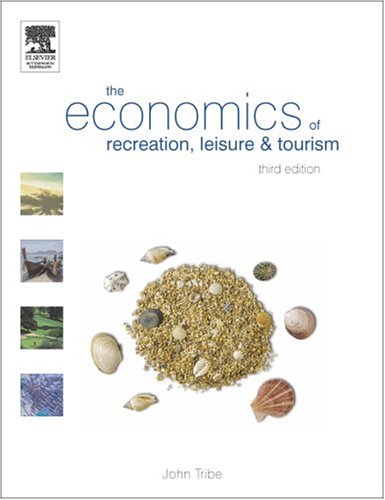
The Economics of Recreation, Leisure and Tourism, - Original PDF
نویسندگان: خلاصه: Now in its third successful edition, The Economics of Leisure and Tourism has been fully revised and updated to cover all the latest issues and changes, and more. Essentially a real world text in applied economics, it explains the necessary economic theories from first principles and applies them to a range of leisure and tourism problems and issues at the consumer, business, national and international level. Key themes discussed are: * How is the provision of leisure and tourism determined and could it be provided in a different way? * What are the key opportunities and threats facing leisure and tourism & environmental impacts? * How can economics be used to manage leisure and tourism? International in its outlook, this text uses examples from Brazil, China, India and Japan, as well as Europe, North America and Australia. With an accompanying website with links and Powerpoint resources for lecturers, this new edition provides: * New chapters on regeneration, tourism as an economic development strategy, globalisation and ppolitical economy of tourism. * Introduction of dependency theory and development economics theories * Liberal use of press cuttings, journal articles and international case studies * User friendly learning features such as: visual mapping of chapter contents, chapter objectives, summaries of key points' short answer questions. * User-friendly and relevant, no 'theory for theory's sake' * Visual mapping of the content of each chapter * Liberal use of press cuttings and international case studies (e.g. North America, Europe and Australia)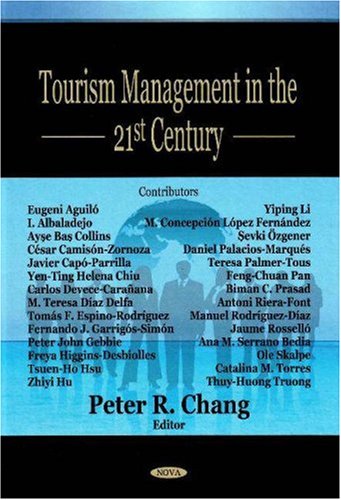
Tourism Management in the 21st Century - Original PDF
نویسندگان: خلاصه: Tourism appears to be an industry that anyone can understand, but in reality it is a very complex subject. It is a meeting ground for economics, sociology, anthropology, geography, ecology and national priority issues among other challenges. Issues of employment, prices and contribution to GDP are all a part of the scope of this book, as well. Leaders of countries find themselves thrown from power if they do not convert tourism potential to a revenue stream. This book presents the latest thinking from around the world.
COMBAT PAIR: The Evolution of Air Force-navy Integration in Strike Warfare - Original PDF
نویسندگان: خلاصه: This report documents the exceptional cross-service harmony that the U.S. Air Force and U.S. Navy have steadily developed in their conduct of integrated strike operations since the first Persian Gulf War in 1991. That close harmony contrasts sharply with the situation that prevailed throughout most of the Cold War, when the two services maintained separate and unique operating mindsets and lacked any significant interoperability features.
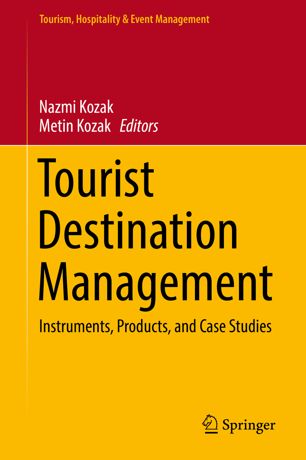
Tourist Destination Management: Instruments, Products, and Case Studies - Original PDF
نویسندگان: خلاصه: This book provides a wide-ranging overview of the current state of tourist destination management and presents important recent research in the field. Contemporary theoretical and methodological approaches to management and marketing are discussed, and innovative practices with respect to both urban and rural destinations are described with the aid of many interesting case studies from across Europe and beyond. In addition, the volume addresses key issues such as governance, cooperation, the use of social media, and sustainability. A variety of influences on tourism development are examined, and efficient strategies for making destinations distinct are explored. The book will be a welcome addition and update to the existing literature and will be of interest to academics and practitioners alike.آیا کتاب مورد نظر هنوز بر روی سایت قرار نگرفته است؟ جای نگرانی نیست! کافی است بر روی گزینه سفارش کتاب کلیک کرده و درخواست خود را ثبت کنید. در کمتر از چند ساعت کتاب شما را آماده خواهیم کرد.