موضوعات
آموزش و پرورش
ادبیات و زبان
پزشکی، دندانپزشکی و داروسازی
تاریخ و جغرافیا
داستان و رمان
دیگر
دین و فلسفه
روانشناسی
ریاضیات و آمار
سلامتی، تناسب اندام و رژیم غذایی
شیمی و پلیمر
علوم اجتماعی و حقوق
علوم زیستی و بیوتکنولوژی
فیزیک و نجوم
کامپیوتر و اینترنت
کتابهای کودکان و داستان
کسب و کار و اقتصاد
کشاورزی و دامپزشکی و غذا
معماری
مهندسی و فناوری
هنر و تئاتر
محصولات

Arab Spring, Libyan Winter - Original PDF
نویسندگان: خلاصه: Revolutions have no specified timetable. Karl Marx used the image of the Mole to stand in for Revolutions to explain their hard-working yet unreliable nature. The Mole spends its time making tunnels underground, and then, when you least expect it, breaks the surface for a breath of air.
Mobilizing Hope: Climate Change and Global Poverty - Original PDF
نویسندگان: خلاصه: The global climate crisis and other pressures on planetary ecology cause profound anxieties for humanity. Climate change threatens to trap hundreds of millions of people in dire poverty-widening the gap in an already deeply divided economy. However, a new generation of activists is offering inspiration, raising hopes in a seemingly hopeless situation. In Mobilizing Hope: Climate Change and Global Poverty, Darrel Moellendorf discusses climate change, global poverty, justice, and the importance of political responses, both internationally and domestically, that offer hope. While there are reasons to worry that the era of pervasive human planetary impact, the Anthropocene, could produce terrible global injustices and massive environmental destruction, that need not be so. Moellendorf contends that the work of bringing about a world united in creating sustainable solutions to environmental crises, that values the Earth's natural wonders, and actualizes a vision of economic justice, is the work of mobilizing hope.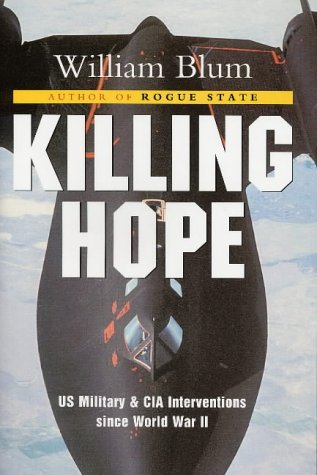
Killing Hope_ US Military and CIA Interventions Since World War II. Part 1-Zed Books Ltd (2003) - Original PDF
نویسندگان: خلاصه: Introduction A Brief History of the Cold War and Anti-communism Our fear that communism might someday take over most of the world blinds us to the fact that anti- communism already has. —Michael Parenti1 It was in the early days of the fighting in Vietnam that a Vietcong officer said to his American prisoner: "You were our heroes after the War. We read American books and saw American films, and a common phrase in those days was "to be as rich and as wise as an American". What happened?"2 An American might have been asked something similar by a Guatemalan, an Indonesian or a Cuban during the ten years previous, or by a Uruguayan, a Chilean or a Greek in the decade subsequent. The remarkable international goodwill and credibility enjoyed by the United States at the close of the Second World War was dissipated country-by-country, intervention-by-intervention. The opportunity to build the war- ravaged world anew, to lay the foundations for peace, prosperity and justice, collapsed under the awful weight of anti-communism. The weight had been accumulating for some time; indeed, since Day One of the Russian Revolution. By the summer of 1918 some 13,000 American troops could be found in the newly-born Union of Soviet Socialist Republics. Two years and thousands of casualties later, the American troops left, having failed in their mission to "strangle at its birth" the Bolshevik state, as Winston Churchill put it.3 The young Churchill was Great Britain's Minister for War and Air during this period. Increasingly, it was he who directed the invasion of the Soviet Union by the Allies (Great Britain, the US, France, Japan and several other nations) on the side of the counter-revolutionary "White Army". Years later, Churchill the historian was to record his views of this singular affair for posterity: Were they [the Allies] at war with Soviet Russia? Certainly not; but they shot Soviet Russians at sight. They stood as invaders on Russian soil. They armed the enemies of the Soviet Government. They blockaded its ports, and sunk its battleships. They earnestly desired and schemed its downfall. But war—shocking! Interference—shame! It was, they repeated, a matter of indifference to them how Russians settled their own internal affairs. They were impartial—Bang!4 What was there about this Bolshevik Revolution that so alarmed the most powerful nations in the world? What drove them to invade a land whose soldiers had recently fought alongside them for over three years and suffered more casualties than any other country on either side of the World War? The Bolsheviks had had the audacity to make a separate peace with Germany in order to take leave of a war they regarded as imperialist and not in any way their war, and to try and rebuild a terribly weary and devastated Russia. But the Bolsheviks had displayed the far greater audacity of overthrowing a capitalist- feudal system and proclaiming the first socialist state in the history of the world. This was uppityness writ incredibly large. This was the crime the Allies had to punish, the virus which had to be eradicated lest it spread to their own people. 6 The invasion did not achieve its immediate purpose, but its consequences were nonetheless profound and persist to the present day. Professor D.F. Fleming, the Vanderbilt University historian of the Cold War, has noted: For the American people the cosmic tragedy of the interventions in Russia does not exist, or it was an unimportant incident long forgotten. But for the Soviet peoples and their leaders the period was a time of endless killing, of looting and rapine, of plague and famine, of measureless suffering for scores of millions— an experience burned into the very soul of a nation, not to be forgotten for many generations, if ever. Also for many years the harsh Soviet regimentations could all be justified by fear that the capitalist powers would be back to finish the job. It is not strange that in his address in New York, September 17, 1959, Premier Khrushchev should remind us of the interventions, "the time you sent your troops to quell the revolution", as he put it.5 In what could be taken as a portent of superpower insensitivity, a 1920 Pentagon report on the intervention reads: "This expedition affords one of the finest examples in history of honorable, unselfish dealings ... under very difficult circumstances to be helpful to a people struggling to achieve a new liberty."6 History does not tell us what a Soviet Union, allowed to develop in a "normal" way of its own choosing, would look like today. We do know, however, the nature of a Soviet Union attacked in its cradle, raised alone in an extremely hostile world, and, when it managed to survive to adulthood, overrun by the Nazi war machine with the blessings of the Western powers. The resulting insecurities and fears have inevitably led to deformities of character not unlike that found in an individual raised in a similar life- threatening manner. We in the West are never allowed to forget the political shortcomings (real and bogus) of the Soviet Union; at the same time we are never reminded of the history which lies behind it. The anti-communist propaganda campaign began even earlier than the military intervention. Before the year 1918 was over, expressions in the vein of "Red Peril", "the Bolshevik assault on civilization", and "menace to world by Reds is seen" had become commonplace in the pages of the New York Times. During February and March 1919, a US Senate Judiciary Subcommittee held heatings before which many "Bolshevik horror stories" were presented. The character of some of the testimony can be gauged by the headline in the usually sedate Times of 12 February 1919: DESCRIBE HORRORS UNDER RED RULE. R.E. SIMONS AND W.W. WELSH TELL SENATORS OF BRUTALITIES OF BOLSHEV1KI— STRIP WOMEN IN STREETS—PEOPLE OF EVERY CLASS EXCEPT THE SCUM SUBJECTED TO VIOLENCE BY MOBS![The Marx Dictionary (Continuum Philosophy Dictionaries, 6)[2012] - Orginal PDF](https://dl.libsan.ir/images/1/12/24_63b73b4dc2ae5.jpg)
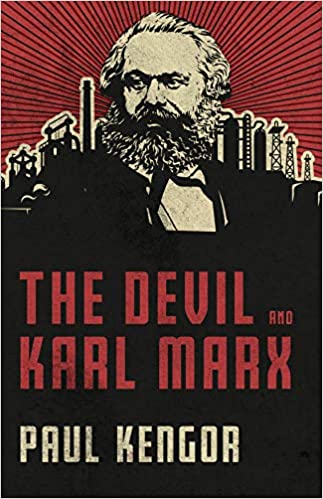
The Devil and Karl Marx: Communism's Long March of Death, Deception, and Infiltration - Epub + Converted pdf
نویسندگان: خلاصه: Two decades after the publication of The Black Book of Communism, nearly everyone is or at least should be, aware of the immense evil produced by that devilish ideology first hatched when Karl Marx penned his Communist Manifesto two centuries ago. Far too many people, however, separate Marx the man from the evils wrought by the oppressive ideology and theory that bears his name.
![Society The Basics (15th Edition) (9780134674841)[2019] - Epub + Converted Pdf](https://dl.libsan.ir/images/1/12/Society_5efd68306529e.jpg)
![Radical Utopianism and Cultural Studies[2019] - Original PDF](https://dl.libsan.ir/images/1/12/8_5ef8a685df4e5.jpg)
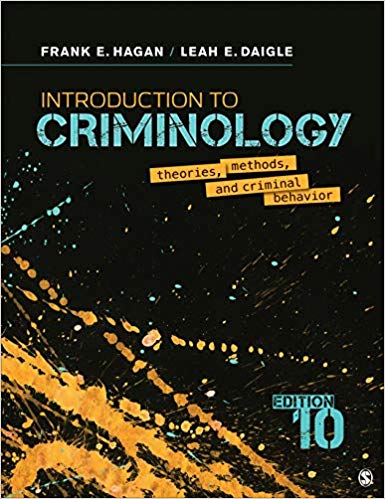
Introduction to Criminology: Theories, Methods, and Criminal Behavior Tenth Edition
نویسندگان: خلاصه: Introduction to Criminology, Tenth Edition, is a comprehensive introduction to the study of criminology, focusing on the vital core areas of the field—theory, method, and criminal behavior. With more attention to crime typologies than most introductory texts, authors Frank E. Hagan and Leah Elizabeth Daigle investigate all forms of criminal activity, such as organized crime, white collar crime, political crime, and environmental crime.آیا کتاب مورد نظر هنوز بر روی سایت قرار نگرفته است؟ جای نگرانی نیست! کافی است بر روی گزینه سفارش کتاب کلیک کرده و درخواست خود را ثبت کنید. در کمتر از چند ساعت کتاب شما را آماده خواهیم کرد.