موضوعات
آموزش و پرورش
ادبیات و زبان
پزشکی، دندانپزشکی و داروسازی
تاریخ و جغرافیا
داستان و رمان
دیگر
دین و فلسفه
روانشناسی
ریاضیات و آمار
سلامتی، تناسب اندام و رژیم غذایی
شیمی و پلیمر
علوم اجتماعی و حقوق
علوم زیستی و بیوتکنولوژی
فیزیک و نجوم
کامپیوتر و اینترنت
کتابهای کودکان و داستان
کسب و کار و اقتصاد
کشاورزی و دامپزشکی و غذا
معماری
مهندسی و فناوری
هنر و تئاتر
محصولات

Fruit Flies (Tephritidae): Phylogeny and Evolution of Behavior - Original PDF
نویسندگان: خلاصه: Fruit flies (Diptera: Tephritidae) are among the most destructive agricultural pests in the world, eating their way through acres and acres of citrus and other fruits at an alarming rate and forcing food and agriculture agencies to spend millions of dollars in control and management measures. But until now, the study of fruit flies has been traditionally biased towards applied aspects (e.g., management, monitoring, and mass rearing)-understandable, given the tremendous economic impact of this species.This work is the first that comprehensively addresses the study of the phylogeny and the evolution of fruit fly behavior. An international group of highly renowned scientists review the current state of knowledge and include considerable new findings on various aspects of fruit fly behavior, phylogeny and related subjects. In the past, the topics of phylogeny and evolution of behavior were barely addressed, and when so, often superficially. Fruit Flies (Tephritidae): Phylogeny and Evolution of Behavior is a definitive treatment, covering all behaviors in a broad range of tephritids.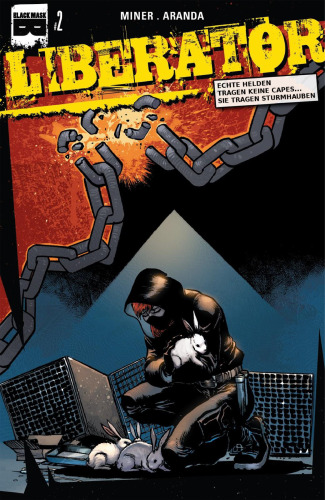
Liberator Band 1 Ausgabe 2 - PDF
نویسندگان: خلاصه: Do you want to recycle your electrical and electronic equipment for free? Learn more Molly Birch has everything a poor City girl could want: an apartment with her own bedroom, two living parents and a boyfriend. But none of it is stable when the anonymous Government dictates all aspects of citizens' lives, from food and medical care access to the number of children couples can have. Molly is sixteen and now old enough to apply for a Courtship with her boyfriend, Gavriel Kingsley. Courtships are the only legal form of romantic relationship for unmarried citizens over sixteen and are the step leading to marriage. Molly and Gavriel have waited years to apply. However, things don't go as planned following their application and medical tests during Clinic Day. The fallout leaves Molly's world shattered, and she makes a desperate and dangerous escape from the only life she's ever known to keep control over something after the Government takes everything from her. On her journey, Molly makes new friends, discovers her dad's secret past, learns her heart's true feelings and finds out how she can make a difference in the City for everyone, not just herself.
Handbook of Water and Wastewater Microbiology - Original PDF
نویسندگان: خلاصه: The purpose of this Handbook is to provide an introduction to modern water and wastewater microbiology, especially for water and wastewater engineers. The study of water and wastewater microbiology is very rewarding: better water treatment, better wastewater treatment, safer wastewater reuse, and thus healthier people – in all parts of our world.
Clinical Applications of PCR (2nd Edition) - Original PDF
نویسندگان: خلاصه: In the second edition of Clinical Applications of PCR, we hope to share with readers the exciting applications of some of these innovations, including PCR for gene expression, methylation, trace molecule, gene dosage, and single cell analysis. It is hoped that the step-by-step protocols and the explanatory notes will help readers to harness the power of these techniques in their laboratories.

Mediated Lives: Waiting and Hope among Iraqi Refugees in Jordan - Original PDF
نویسندگان: خلاصه: Using the example of Iraqi refugees in Jordan's capital of Amman, this book describes how information and communication technologies (ICTs) play out in the everyday experiences of urban refugees, geographically located in the Global South, and shows how interactions between online and offline spaces are key for making sense of the humanitarian regime, for carving out a sense of home and for sustaining hope. This book paints a humanizing account of making do amid legal marginalization, prolonged insecurity, and the proliferation of digital technologies.
Hope Behind Bars: Notes from Indian Prisons - Original PDF
نویسندگان: خلاصه: prisons – the perils of freedom versus infinite detention. Focus is also brought to a lightly documented category of persons – the children of prisoners – in chapter ten by K. R. Raja, who highlights their secondary vulnerabilities and invisible suffering. A prison is a world of its own, where residents live without the support systems that those on the outside take for granted. Prisoners hope and will each day to be their last in confinement. We believe that the stories in Hope Behind Bars provide insight into lives less ordinary.
Achievements and Legacy of the Obama Presidency: “Hope and Change?” - Original PDF
نویسندگان: خلاصه: Campaigning on the simple mantra of HOPE, Obama’s mindset was that his legacy would not be one of race or ethnicity but one of positive change and unity across the political divide. He arrived in Washington, D.C. riding a wave of optimism as the American polity had grown tired and weary of the partisan politics and was looking for a “savior of sorts” who would restore their belief in the American dream and in equality and justice for all. But as Chuck Todd (2014: 471) notes, “hope is one thing, change another.” Obama would spend the next eight years fighting the partisanship and political dysfunction that he was elected to trans- form, including at times a debilitated Democratic controlled Congress and Republicans who sat out to stop every attempt of the president to bring about change. Despite all this apparent chaos, confusion and partisanship, Obama went to work to fulfill many of his campaign promises. In so doing, he would work with anyone who wanted to change the status quo. Obama would advocate for revising the social safety net programs and appear to be siding with Republicans while angering Democrats. At other times, he would side with Democrats for healthcare reform, gun control and amnesty for illegal immigrants to the disgust of his Republican counter- parts. When necessary, he would work around Congress by signing 276 executive orders and issuing another 1186 presidential proclamations. He gave us the Affordable Care Act, the stimulus, the Dodd-Frank Wall Street Reform, an executive action for Dreamers, the repeal of “Don’t Ask, Don’t Tell,” a nuclear deal with Iran, diplomatic relations with Cuba, a climate deal in Paris, a New START treaty, a reform of student-loan programs, and two liberal Supreme Court appointments (Frank 2019). As his second term came to a close, Obama would leave office with an impressive list of accomplishments but an approval rating 10 points lower than when he took office.1 When he left the Oval Office, the country had endured twenty-four straight years of polarizing presidents, all three of whom were elected, in part, to help end some of the acrimony (Todd 1 President Barack Obama would leave office with an approval rating of 57% according to a survey from the polling firm Gallup taken from January 9 to 15, 2017. Obama’s exiting approval rating is 23% points higher than those of former President George W. Bush but nine points lower than those of President Bill Clinton. 1 INTRODUCTION 3 2014: 490). But the divisiveness that had paralyzed so many presidents in their quest to fortify their legacy was waiting in the wings. Presidential legacies are often cemented by whom the electorate selects to take the place of the incumbent. Since the Civil War, only two presi- dents, Ulysses S. Grant and Ronald Reagan, have served two full terms, then given way to another member of their own party, winning a veri- table third term (Todd 2014: 481). Not so for President Obama. Despite having an “anointed successor” in Hillary Clinton and a seasoned Vice President in Joe Biden, Obama’s plan for a systematic overhaul of the bureaucracy and hope for an end to persistent inside-the-Beltway grid- lock would come to an abrupt halt. The plan to galvanize his legacy through the election of Hillary Clinton was stopped dead in its tracks when Republican maverick Donald J. Trump was elected the 45th Pres- ident of the United States in an election result that even the staunchest Republicans called shocking.
Hatred, Emptiness, and Hope: Transference-Focused Psychotherapy in Personality Disorders - Original PDF
نویسندگان: خلاصه: Introduction The present volume continues my investigation of the psychopathology and treatment of severe personality disorders. It focuses on the analysis of particular clinical features of personality pathologies and describes contemporary psychoanalytic object relations theory as a general theoret- ical frame of treatment that allows us to conceptualize both normal per- sonality functioning and the very nature of personality disorders. This volume also includes my recent contributions to understanding the rela- tionship between neurobiological dispositions and their interaction with psychodynamic developments, again, both in normality and psychopa- thology. Finally, this volume explores the application of object relations theory to group processes, love relations, and therapists’ training. Part I of the book includes major theoretical statements. Chapter 1, “Object Relations Theory and Transference Analysis,” presents a brief, updated summary of contemporary object relations theory and its direct relevance to transference analysis, the fundamental therapeutic approach of transference-focused psychotherapy (TFP). This chapter summarizes the theoretical approach that informs the new psychotherapeutic devel- opments in the treatment of severe personality disorders that are de- scribed throughout the entire volume. Chapter 2, “Some Implications of New Developments in Neurobiology for Psychoanalytic Object Relations Theory” summarizes developments in neurobiology regarding the con- ceptualization of affect systems and their role as the motivational basis ix x HATRED, EMPTINESS, AND HOPE for establishing internalized dyadic self- and object-relations structures. This chapter shows how the underlying limbic and cortical brain struc- tures and functions contribute to embedding the fundamental concepts of self and of significant others. It proposes that the formation of such dy- adic structures is an essential task of higher levels of psychic functioning. Part II, on technique, updates empirical studies of the Personality Disorders Institute at Weill Cornell Medical College, expanding the ap- plications of TFP, exploring its relationship to standard psychoanalytic technique, and outlining a general comprehensive theory of technique that applies to both psychoanalysis and its derived psychotherapies. Chapter 3, “Extensions of Psychoanalytic Technique: The Mutual Influ- ences of Standard Psychoanalysis and Transference-Focused Psycho- therapy” presents an updated view of TFP in comparison with standard psychoanalytic technique that differentiates more sharply these two technical approaches and discusses the problems in training therapists efficiently in both modalities. Chapter 4, “Therapeutic Implications of Transference Structures in Various Personality Pathologies,” presents an overview of transference developments in different modalities of severe personality disorders and the modifications in technical approaches to transference analysis related to these structural differences. It is a highly specialized description of TFP in action. Chapter 5, “Affective Domi- nance, Dyadic Relationship, and Mentalization,” focuses on two basic premises from which the therapist enters every therapeutic session—that is, the alertness to affective dominance and the diagnosis of the predom- inant dyadic object relationship linked to it. By illustrating this approach with clinical cases, the chapter also points to similarities and differences between TFP and mentalization-based therapy (MBT), an alternative psychodynamic approach to severe personality disorders. Chapter 6, “Reflections on Supervision,” describes my personal experience as well as general controversial issues regarding the supervision of psychoan- alytic and derivative treatments. In the process, the chapter details our collective experience of training and supervising clinicians in TFP over many years at the Personality Disorders Institute. Part III, on specific psychopathologies, deals with particular disor- ders within the broad field of severe personality disorders. Chapter 7, “Psychodynamics and Treatment of Schizoid Personality Disorders,” presents our experience with these complex disorders. Schizoid struc- ture has received less attention in recent times than other types of severe personality disorders, particularly borderline and narcissistic personal- ity disorders. This chapter presents a diagnostic update and summa- rizes the specific contributions of the TFP approach to the treatment of schizoid personality. Chapter 8, “Psychotic Personality Structure,” ex- plores the differences between borderline personality organization and psychotic personality organization. It describes the development of psy- chotic features as a potential transitory regression in patients with bor- xiIntroduction derline personality organization, as well as a reflection of a psychotic structure that only emerges during treatment. It proposes correspond- ing differences in technique for transitory psychotic developments aris- ing in sessions, for transference psychosis, and for the emergence of major psychotic illness during the course of TFP. The chapter also ana- lyzes the nature and shifts in reality testing in the context of transference analysis. Chapter 9, “Narcissistic Pathology of Love Relations,” deals with the specific pathology of narcissistic personalities, the great diffi- culties of these patients in establishing and maintaining a love relation in depth, and the general study of sexuality and the capacity to love as part of the diagnostic evaluation of all patients with severe personality disorders. It also considers the influences of the therapist’s own emo- tional maturity in the assessment of this aspect of psychopathology. Part IV deals with the application of object relations theory to inpa- tient hospital treatment, to group regression and political leadership, and to psychoanalytic education. Chapter 10, “Psychoanalytic Ap- proaches to Inpatient Treatment of Personality Disorders: A Neglected Dimension,” examines the inpatient treatment of patients with person- ality disorders, a neglected therapeutic approach in the United States. Although pioneered predominantly in the United States, inpatient treat- ment has been developed in new ways in recent European experiences, with relatively extended hospital treatment of severe personality disor- ders. This chapter summarizes both the North American and recent Eu- ropean experiences with an important therapeutic instrument that, mostly for financial reasons, has been underutilized in the United States. It offers important technical tools that are relevant for the repetitive brief hospitalizations of regressed borderline patients that have replaced se- lective long-term inpatient treatment. This approach may be the basis for the development of optimal treatment of very regressed stages of illness in the future. Chapter 11, “Malignant Narcissism and Large Group Re- gression,” applies psychoanalytic object relations theory and the devel- oping knowledge of the social functioning of some personality disorders to the study of the mutual influences of severe leadership pathology in organizational and political structures and the psychological conditions that underpin large group regression. Political circumstances that foster such large group regression in social subgroups and leadership with ma- lignant narcissistic features tend to reinforce each other, with potentially damaging and dangerous consequences to the social community. This chapter is a contribution to the clarification of these potentially threaten- ing and damaging social developments. Chapter 12, “Challenges for the Future of Psychoanalysis,” applies the psychoanalytical approach that underlies this volume to the analysis of particular conditions of psycho- analysis today as a profession, an educational enterprise, and a social or- ganization within the mental health sciences. This chapter and the book end with recommendations for innovations that may strengthen the role xii HATRED, EMPTINESS,AND HOPE of psychoanalysis as a profession, a treatment approach, and a social or- ganization. It proposes solutions to organizational problems, particu- larly stressing the urgent need for development of empirical research, psychoanalytic psychotherapies, and radical renovation in its educa- tional structure.
Lavender Fields: Black Women Experiencing Fear, Agency, and Hope in the Time of COVID-19 - Original PDF
نویسندگان: خلاصه: I start this book on African/Black women’s testimonies of living with COVID-19 by situating myself and my role in it. Over my twenty-plus years as an academician, I have evolved. I started simply wanting to be a political scientist who focused on Black women and public policy. I saw my work as an extension of me, but not in the way I do at this stage of my career. There was a shift in my approach to being an academician at some point. I started journaling about being a storyteller of Black women’s stories. Research, what I had been trained in, took a back seat, and the notion of storytell- ing became more prominent. I cannot explain this shift, and I have learned that some things need not be explained over time. Sometimes, Black women simply know (see Hill Collins 2000). Then COVID-19 hit. At some point during shelter in place—I have lost count of how long I have been at home—the Black feminine ancestors whispered to me. They called on me to undertake this project on Black women and COVID-19. I resisted. The project felt too big for me. I was worried that I could not do it and do it well. I went out into my garden. The energy of the ancestors deepened, and the call seemed to wrap itself around me in a way that would not release me. I did not feel threatened. But I resisted. I stayed in my gar- den for hours in my efforts to resist—weeding, tending, and avoiding. Finally, the heat of the day caught up to me, and I slowly made my way inside. I needed to find something else to occupy my mind, something that allowed me to continue avoiding the call for this projectآیا کتاب مورد نظر هنوز بر روی سایت قرار نگرفته است؟ جای نگرانی نیست! کافی است بر روی گزینه سفارش کتاب کلیک کرده و درخواست خود را ثبت کنید. در کمتر از چند ساعت کتاب شما را آماده خواهیم کرد.