موضوعات
آموزش و پرورش
ادبیات و زبان
پزشکی، دندانپزشکی و داروسازی
تاریخ و جغرافیا
داستان و رمان
دیگر
دین و فلسفه
روانشناسی
ریاضیات و آمار
سلامتی، تناسب اندام و رژیم غذایی
شیمی و پلیمر
علوم اجتماعی و حقوق
علوم زیستی و بیوتکنولوژی
فیزیک و نجوم
کامپیوتر و اینترنت
کتابهای کودکان و داستان
کسب و کار و اقتصاد
کشاورزی و دامپزشکی و غذا
معماری
مهندسی و فناوری
هنر و تئاتر
محصولات


Flight Dynamics Principles, Second Edition: A Linear Systems Approach to Aircraft Stability and Control (6th Edition) - Original PDF
نویسندگان: خلاصه: The study of flight dynamics requires a thorough understanding of the theory of the stability and control of aircraft, an appreciation of flight control systems and a comprehensive grounding in the theory of automatic control. Flight Dynamics provides all three in an accessible and student focussed text. Written for those coming to the subject for the first time the book is suitable as a complete first course text

A Dictionary of Literary Symbols (2nd Edition) - Original PDF
نویسندگان: خلاصه: This is the first dictionary of symbols to be based on literature, rather than 'universal' psychological archetypes or myths. It explains and illustrates the literary symbols that we all frequently encounter (such as swan, rose, moon, gold), and gives hundreds of cross-references and quotations. The dictionary concentrates on English literature, but its entries range widely from the Bible and classical authors to the twentieth century, taking in American and European literatures. For this new edition, Michael Ferber has included over twenty completely new entries (including bear, holly, sunflower and tower), and has added to many of the existing entries. Enlarged and enriched from the first edition, its informed style and rich references make this book an essential tool not only for literary and classical scholars, but for all students of literature.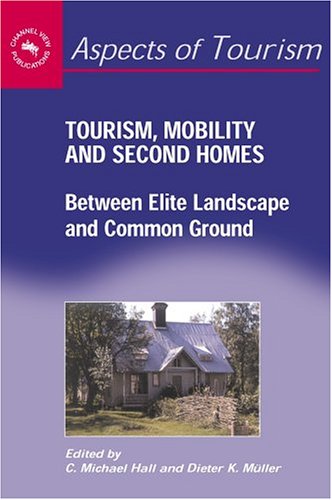
Tourism, Mobility & Second Homes: Between Elite Landscape and Common Ground - Original PDF
نویسندگان: خلاصه: Second homes are an integral component of tourism in rural and peripheral areas. This volume represents a major international review of second homes for over 25 years. The volume represents helpful information for those interested in rural regional development processes.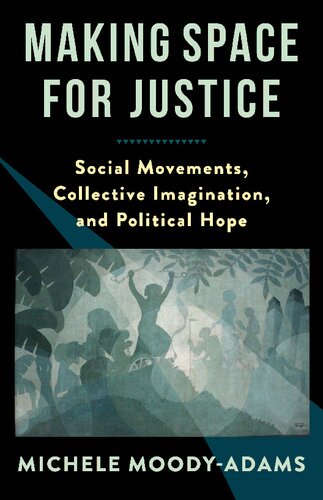
Making Space for Justice: Social Movements, Collective Imagination, and Political Hope - Original PDF
نویسندگان: خلاصه: From nineteenth-century abolitionism to Black Lives Matter today, progressive social movements have been at the forefront of social change. Yet it is seldom recognized that such movements have not only engaged in political action but also posed crucial philosophical questions about the meaning of justice and about how the demands of justice can be met. Michele Moody-Adams argues that anyone who is concerned with the theory or the practice of justice―or both―must ask what can be learned from social movements. Drawing on a range of compelling examples, she explores what they have shown about the nature of justice as well as what it takes to create space for justice in the world. Moody-Adams considers progressive social movements as wellsprings of moral inquiry and as agents of social change, drawing out key philosophical and practical principles. Social justice demands humane regard for others, combining compassionate concern and robust respect. Successful movements have drawn on the transformative power of imagination, strengthening the motivation to pursue justice and to create the political institutions and social policies that can sustain it by inspiring political hope. Making Space for Justice contends that the insights arising from social movements are critical to bridging the gap between discerning theory and effective practice―and should be transformative for political thought as well as for political activism.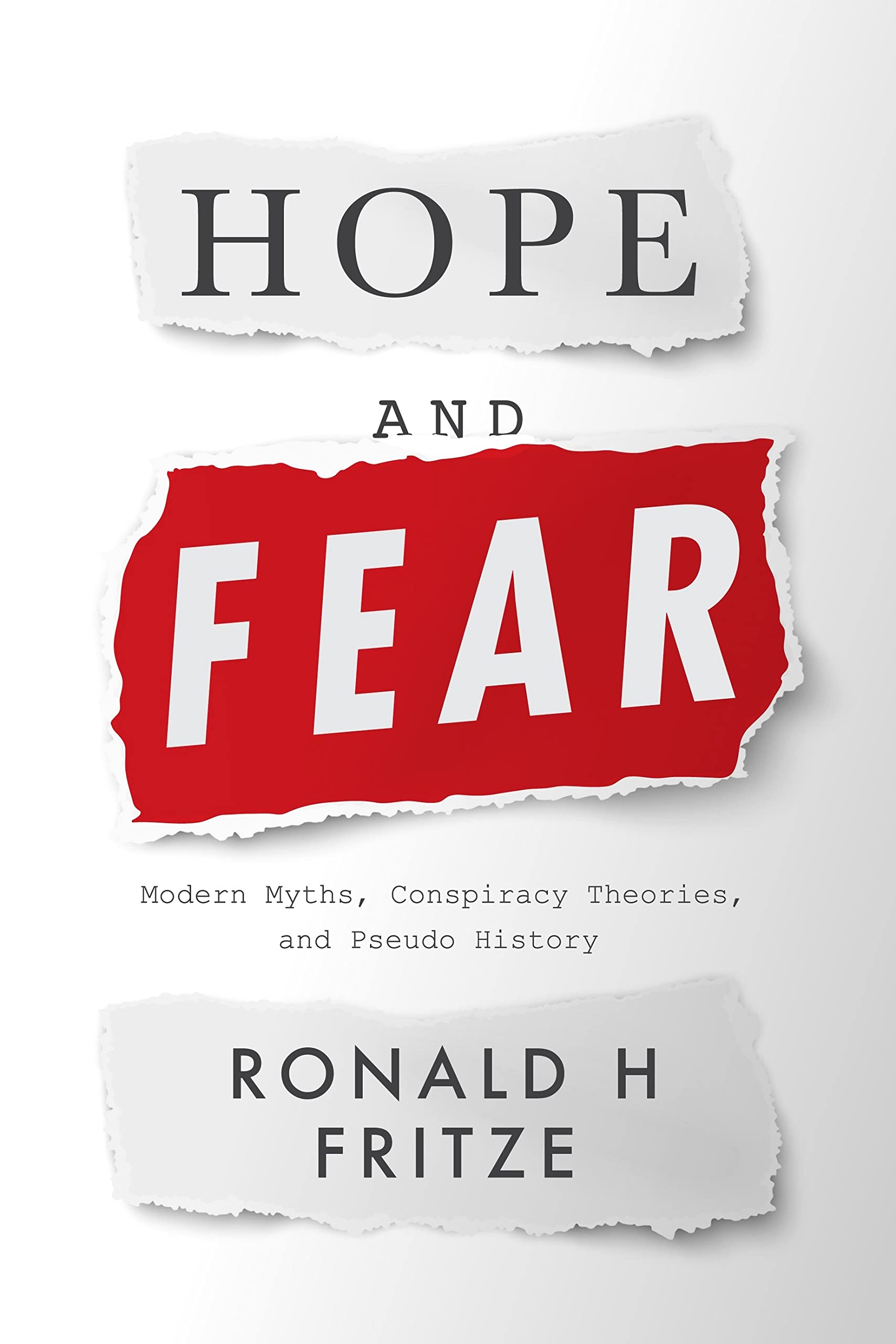
Hope and Fear: Modern Myths, Conspiracy Theories and Pseudo History - Original PDF
نویسندگان: خلاصه: Description: A myth-busting journey through the twilight world of fringe ideas and alternative facts. Is a secret and corrupt Illuminati conspiring to control world affairs and bring about a New World Order? Was Donald Trump a victim of massive voter fraud? Is Elizabeth II a shapeshifting reptilian alien? Who is doing all this plotting? In Hope and Fear, Ronald H. Fritze explores the fringe ideas and conspiracy theories people have turned to in order to make sense of the world around them, from myths about the Knights Templar and the Ten Lost Tribes of Israel, to Nazis and the occult, the Protocols of Zion and UFOs. As Fritze reveals, when conspiracy theories, myths, and pseudo-history dominate a society’s thinking, facts, reality, and truth fall by the wayside.
Achievements and Legacy of the Obama Presidency: “Hope and Change?” - Original PDF
نویسندگان: خلاصه: Campaigning on the simple mantra of HOPE, Obama’s mindset was that his legacy would not be one of race or ethnicity but one of positive change and unity across the political divide. He arrived in Washington, D.C. riding a wave of optimism as the American polity had grown tired and weary of the partisan politics and was looking for a “savior of sorts” who would restore their belief in the American dream and in equality and justice for all. But as Chuck Todd (2014: 471) notes, “hope is one thing, change another.” Obama would spend the next eight years fighting the partisanship and political dysfunction that he was elected to trans- form, including at times a debilitated Democratic controlled Congress and Republicans who sat out to stop every attempt of the president to bring about change. Despite all this apparent chaos, confusion and partisanship, Obama went to work to fulfill many of his campaign promises. In so doing, he would work with anyone who wanted to change the status quo. Obama would advocate for revising the social safety net programs and appear to be siding with Republicans while angering Democrats. At other times, he would side with Democrats for healthcare reform, gun control and amnesty for illegal immigrants to the disgust of his Republican counter- parts. When necessary, he would work around Congress by signing 276 executive orders and issuing another 1186 presidential proclamations. He gave us the Affordable Care Act, the stimulus, the Dodd-Frank Wall Street Reform, an executive action for Dreamers, the repeal of “Don’t Ask, Don’t Tell,” a nuclear deal with Iran, diplomatic relations with Cuba, a climate deal in Paris, a New START treaty, a reform of student-loan programs, and two liberal Supreme Court appointments (Frank 2019). As his second term came to a close, Obama would leave office with an impressive list of accomplishments but an approval rating 10 points lower than when he took office.1 When he left the Oval Office, the country had endured twenty-four straight years of polarizing presidents, all three of whom were elected, in part, to help end some of the acrimony (Todd 1 President Barack Obama would leave office with an approval rating of 57% according to a survey from the polling firm Gallup taken from January 9 to 15, 2017. Obama’s exiting approval rating is 23% points higher than those of former President George W. Bush but nine points lower than those of President Bill Clinton. 1 INTRODUCTION 3 2014: 490). But the divisiveness that had paralyzed so many presidents in their quest to fortify their legacy was waiting in the wings. Presidential legacies are often cemented by whom the electorate selects to take the place of the incumbent. Since the Civil War, only two presi- dents, Ulysses S. Grant and Ronald Reagan, have served two full terms, then given way to another member of their own party, winning a veri- table third term (Todd 2014: 481). Not so for President Obama. Despite having an “anointed successor” in Hillary Clinton and a seasoned Vice President in Joe Biden, Obama’s plan for a systematic overhaul of the bureaucracy and hope for an end to persistent inside-the-Beltway grid- lock would come to an abrupt halt. The plan to galvanize his legacy through the election of Hillary Clinton was stopped dead in its tracks when Republican maverick Donald J. Trump was elected the 45th Pres- ident of the United States in an election result that even the staunchest Republicans called shocking.
Hope for a Heated Planet: How Americans Are Fighting Global Warming and Building a Better Future - Original PDF
نویسندگان: خلاصه: am finishing this book in the final days of the George W. Bush adminis- tration. For those of us who love the environment and long for peace, it has been a dark time. Through it, I have often thought of the words of the poet Theodore Roethke that I first heard from scholar and activist Robert Jay Lifton: “In a dark time, the eye begins to see.” The first light of dawn is now visible as the Democratic candidate, Senator Barack Obama, pushed by a growing grassroots movement, embraces action on climate change. To a lesser degree, though far more than President Bush, so does the Republican contender, Senator John McCain. That was far from the case when I began this project at the height of the president’s wartime popularity. This has turned out to be a book as much about hope and democracy as it is about global warming. Its central theme is that you and I can change history. What we believe, what actions we take, actually matter. It is an idea central to democracy. And it should give us hope. I disagree, strongly, with those who believe the American public has turned into a hopeless gaggle of consumers and couch potatoes who are content to let others rule their lives—or destroy the planet. At the height of President Bush’s popularity and influence it may have appeared that way. But national security and environmental degradation (especially global climate change) are complex, difficult, and abstract sub- jects. It has taken some time for us Americans to grasp the gravity of our situation, from melting ice caps to Iraq. This is especially true when our media mostly cover the White House and the Pentagon—regardless of the occupants—and report each utterance as gospel. Meanwhile, most of us are busy with jobs, families, and problems near home that we can actually see and do something about. The result has been that global warming—caused by the vast outpour- x P REFACE ings of carbon dioxide (CO2) and other pollutants from our cars, buildings, and factories—has increased and is picking up speed. But at the same time, so has a growing and revived environmental movement. It is joined now with new allies from the religious community, business, labor, medical and public health professionals, educators, and more. This new climate move- ment has deep roots in the big environmental groups, too often ignored or derided, that have been working to warn us and prevent global climate change since the elder George Bush’s administration in the 1980s. Their work is now bearing fruit. The public is becoming aroused and engaged. And, as a result, we will have a new, much more climate-friendly president and Congress in 2009. This book tells that story and also ex- plains the basics of climate change and its effects on human health and well-being—not just on polar bears and penguins. But Hope for a Heated Planet is finally about solutions to our dilemma. I’ve tried to give you the best steps you can take, both personal and political, to make a difference and to get involved. Like most authors, I like to imagine, of course, that our new president will take to heart every word I have poured out here. But even more impor- tant is that you do. My mother, Margaret Kirkland Musil, died after ninety- one wonderful years as I was writing. She taught me to love life, to love nature, to learn, to have faith, and to act on my beliefs. My first grandchild, Catherine Kirkland Unruh, was born shortly after. She will need the same lessons. So will all our children and grandchildren. Global climate change, we now know, can be prevented by building a vi- brant, healthy economy that does away with the belching furnaces, smoke- stacks, and combustion engines from the outmoded technologies of the nineteenth and twentieth centuries. But in a democracy, that will depend not on our new president, or the one after that. It is up to us. And the signs now are that many, many citizens and their organizations in this great na- tion are indeed aroused. But to prevail, we will need even more. That is really why I have written. I want you and your family and friends to join with me and millions of other Americans in making history. Nobody else can, or should, do it for youآیا کتاب مورد نظر هنوز بر روی سایت قرار نگرفته است؟ جای نگرانی نیست! کافی است بر روی گزینه سفارش کتاب کلیک کرده و درخواست خود را ثبت کنید. در کمتر از چند ساعت کتاب شما را آماده خواهیم کرد.