محصولات
The Enigma of Money: Gold, Central Banknotes, and Bitcoin - Original PDF
نویسندگان: Makoto Nishibe (auth.) خلاصه: This book provides a new way of understanding modern money and markets by stressing their self-fulfilling/self-destructive properties as institutions from evolutionary perspectives. In contrast to an unrealistic view of the neoclassical general equilibrium theory that models the price mechanism of a “concentrated market” without using money, presented here is an alternative theory of markets on how a realistic “dispersive market” using a stock of money and inventory as buffers can work as a multilayered price-quantitative adjustment system.
A Glossary of Literary Terms (10th Edition)- Original PDF
نویسندگان: M. H. ABRAMS خلاصه: First published fifty years ago, A GLOSSARY OF LITERARY TERMS remains an essential text for all serious students of literature. Now fully updated to reflect the latest scholarship on recent and rapidly evolving critical theories, the tenth edition contains a complete glossary of essential literary terms presented as a series of engaging essays that explore the terms, place them in context, and suggest related entries and additional reading. This indispensable, authoritative, and highly affordable reference covers terms useful in discussing literature and literary history, theory, and criticism. Perfect as a core text for introductory literary theory or as a supplement to any literature course, this classic work is an invaluable reference that students can continue to use throughout their academic and professional careers.
Making Space for Justice: Social Movements, Collective Imagination, and Political Hope - Original PDF
نویسندگان: Michele Moody-Adams خلاصه: From nineteenth-century abolitionism to Black Lives Matter today, progressive social movements have been at the forefront of social change. Yet it is seldom recognized that such movements have not only engaged in political action but also posed crucial philosophical questions about the meaning of justice and about how the demands of justice can be met. Michele Moody-Adams argues that anyone who is concerned with the theory or the practice of justice―or both―must ask what can be learned from social movements. Drawing on a range of compelling examples, she explores what they have shown about the nature of justice as well as what it takes to create space for justice in the world. Moody-Adams considers progressive social movements as wellsprings of moral inquiry and as agents of social change, drawing out key philosophical and practical principles. Social justice demands humane regard for others, combining compassionate concern and robust respect. Successful movements have drawn on the transformative power of imagination, strengthening the motivation to pursue justice and to create the political institutions and social policies that can sustain it by inspiring political hope. Making Space for Justice contends that the insights arising from social movements are critical to bridging the gap between discerning theory and effective practice―and should be transformative for political thought as well as for political activism.
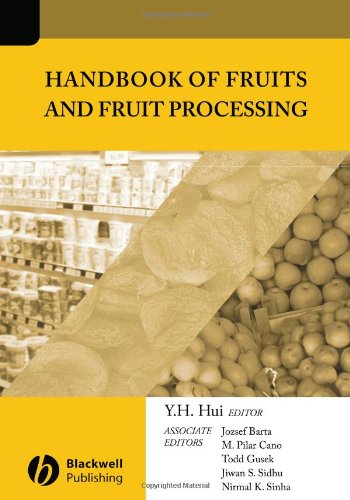
Handbook of Fruits and Fruit Processing - Original PDF
نویسندگان: Y.H. Hui, József Barta, M. Pilar Cano, Todd W. Gusek, Jiwan S. Sidhu Ph.D., Nirmal K. Sinha Ph.D خلاصه: The processing of fruits continues to undergo rapid change. In the Handbook of Fruits and Fruit Processing, Dr. Y.H. Hui and his editorial team have assembled over forty respected academicians and industry professionals to create an indispensable resource on the scientific principles and technological methods for processing fruits of all types. The book describes the processing of fruits from four perspectives: a scientific basis, manufacturing and engineering principles, production techniques, and processing of individual fruits. A scientific knowledge of the horticulture, biology, chemistry, and nutrition of fruits forms the foundation. A presentation of technological and engineering principles involved in processing fruits is a prelude to their commercial production. As examples, the manufacture of several categories of fruit products is discussed. The final part of the book discusses individual fruits, covering their harvest to a finished product in a retail market. As a professional reference book replete with the latest research or as a practical textbook filled with example after example of commodity applications, the Handbook of Fruits and Fruit Processing is the current, comprehensive, yet compact resource ideal for the fruit industry.
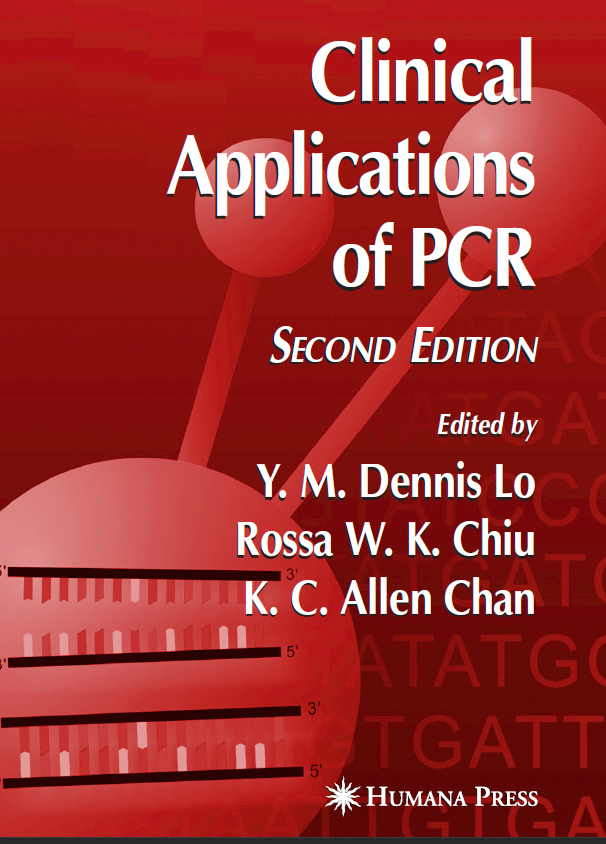
Clinical Applications of PCR (2nd Edition) - Original PDF
نویسندگان: Y. M. Dennis Lo Rossa W. K. Chiu K. C. Allen Chan خلاصه: In the second edition of Clinical Applications of PCR, we hope to share with readers the exciting applications of some of these innovations, including PCR for gene expression, methylation, trace molecule, gene dosage, and single cell analysis. It is hoped that the step-by-step protocols and the explanatory notes will help readers to harness the power of these techniques in their laboratories.
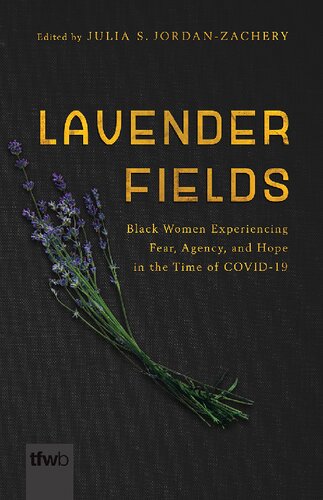
Lavender Fields: Black Women Experiencing Fear, Agency, and Hope in the Time of COVID-19 - Original PDF
نویسندگان: Julia S. Jordan-Zachery (editor) خلاصه: I start this book on African/Black women’s testimonies of living with COVID-19 by situating myself and my role in it. Over my twenty-plus years as an academician, I have evolved. I started simply wanting to be a political scientist who focused on Black women and public policy. I saw my work as an extension of me, but not in the way I do at this stage of my career. There was a shift in my approach to being an academician at some point. I started journaling about being a storyteller of Black women’s stories. Research, what I had been trained in, took a back seat, and the notion of storytell- ing became more prominent. I cannot explain this shift, and I have learned that some things need not be explained over time. Sometimes, Black women simply know (see Hill Collins 2000). Then COVID-19 hit. At some point during shelter in place—I have lost count of how long I have been at home—the Black feminine ancestors whispered to me. They called on me to undertake this project on Black women and COVID-19. I resisted. The project felt too big for me. I was worried that I could not do it and do it well. I went out into my garden. The energy of the ancestors deepened, and the call seemed to wrap itself around me in a way that would not release me. I did not feel threatened. But I resisted. I stayed in my gar- den for hours in my efforts to resist—weeding, tending, and avoiding. Finally, the heat of the day caught up to me, and I slowly made my way inside. I needed to find something else to occupy my mind, something that allowed me to continue avoiding the call for this project
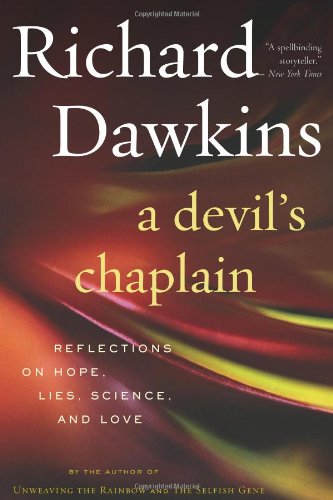
A devil's chaplain: reflections on hope, lies, science, and love - Original PDF
نویسندگان: Richard Dawkins خلاصه: The first essay in this volume, A Devil's Chaplain (1.1), has not previously been published. The title, borrowed by the book, is explained in the essay itself. The second essay, What is True? (1.2), was my contribution to a symposium of that name, in Forbes ASAP magazine. Scientists tend to take a robust view of truth and are impatient of philosophical equivocation over its reality or importance. It's hard enough coaxing nature to give up her truths, without spectators and hangers-on strewing gratuitous obstacles in our way. My essay argues that we should at least be consistent. Truths about everyday life are just as much - or as little - open to philosophical doubt as scientific truths. Let us shun double standards. At times I fear turning into a double standards bore. It started in child- hood when my first hero, Doctor Dolittle (he returned irresistibly to mind when I read the Naturalist's Voyage of my adult hero, Charles Darwin), raised my consciousness, to borrow a useful piece of feminist jargon, about our treatment of animals. Non-human animals I should say, for, of course, we are animals. The moral philosopher most justly credited with raising today's consciousness in this direction is Peter Singer, lately moved from Australia to Princeton. His The Great Ape Project aims towards granting the other great apes, as near as is practically possible, civil rights equivalent to those enjoyed by the human great ape. When you stop and ask yourself why this seems so immediately ridiculous, the harder you think, the less ridiculous it seems. Cheap cracks like 'I suppose you'll need reinforced ballot-boxes for gorillas, then?' are soon dispatched: we give rights, but not the vote, to children, lunatics and Members of the House of Lords. The biggest objection to the GAP is 'Where will it all end? Rights for oysters?' (Bertrand Russell's quip, in a similar context). Where do you draw the line? Gaps in the Mind (1.3), my own contribution to the GAP book, uses an evolutionary argument to show that we should not be in the business of drawing lines in the first place. There's no law of nature that says boundaries have to be clear-cut.
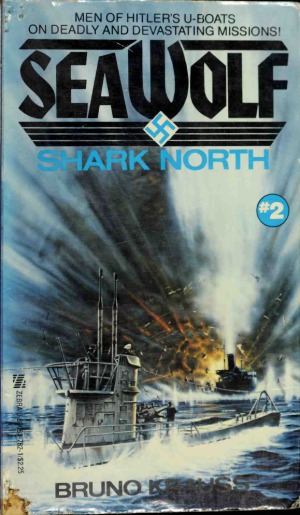
Shark North (Sea Wolf 2) - Original PDF
نویسندگان: Bruno Krauss خلاصه: Winter 1940 — and a lone U-boat glides silently up a Norwegian fjord, its cargo more deadly than the torpedoes in its hull. Its mission: to land a civilian on the deserted coast of Norway. Its orders: from the Fuhrer himself. And for Baldur Wolz — the man they call Sea Wolf — it is a mission that will test his courage, his daring and ruthlessness to the utmost. His vicious battles with the enemy above he expects. But they are nothing to the silent horrors of the enemy within... Shark North is the second in the gripping series of novels about the U-boat war waged with grim ferocity in the bitter depths of the world’s oceans.
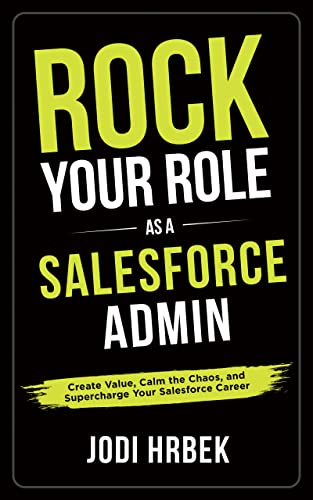
Rock your Role as a Salesforce Admin: Create Value, Calm the Chaos, and Supercharge your Salesforce Career - Epub + Converted Pdf
نویسندگان: Jodi Hrbek خلاصه: Rock your Role as a Salesforce Admin: Create Value, Calm the Chaos, and Supercharge your Salesforce Career by Jodi Hrbek
Fooled By Randomness - PDF
نویسندگان: Nassim Nicholas Taleb خلاصه: This is my book summary of Fooled by Randomness by Nassim Nicholas Taleb. My notes are informal and often contain quotes from the book as well as my own thoughts. This summary also includes key lessons and important passages from the book. According to Taleb, the book's most popular chapter was Chapter 11, the one in which he compressed all the literature on the topic of miscalculating probability. Important point: “it's more random than we think, not it is all random.” Chance favors preparedness, but it is not caused by preparedness (same for hard work, skills, etc.) “This business of journalism is just about entertainment, particularly when it comes to radio and television.” As much as we want to “keep it simple, stupid” … It is precisely the simplification of issues that are actually very complex, which can be dangerous. “Things that happen with little help from luck are more resistant to randomness.” “Mild success can be explainable by skills and labor. Wild success is attributable to variance.” One common theory for why people pursue leadership is because of “social emotions” which cause others to be influenced by a person due to small, almost imperceptible physical signals like charisma, gestures, and gait. This has also been shown via evolutionary psychology: when you perform well in life, you get all “puffed up” in the way you carry yourself, the bounce in your step, etc. From an evolution standpoint this is great because it becomes easier to spot the most successful / desirable mate. The concept of alternative histories is particularly interesting. If you were to relive a set of events 1000 times, what would the range of outcomes be? If there is very little variance in your alternative histories (i.e. You chose to become a dentist and you will probably make more or less the same amount of money and live a similar lifestyle all 1000 times), then you are in a relatively non- random situation. Meanwhile, if there is a very wide range of normal results when considering 1,000 variations (entrepreneurs, traders, etc.), then it is a very random situation. The quality of a choice cannot be judged just by the result. (I first learned this in baseball. Just because a pitch you call or play you call doesn't work out doesn't make it a poor choice. It could have been the right call, but bad luck. Or vice versa.) “Certainty is something that is likely to take place across the highest number of different alternative histories. Uncertainty concerns events that should take place in the lowest number of them.” You should think carefully about getting more insurance / shielding yourself from events that — although unlikely — could be catastrophic. You essentially want to insulate yourself from terrible random accidents. We have a tendency to see risks against specific things as more likely than general risks (dying in a terrorist attack while traveling vs. dying on your next trip, even though the second includes the first). We seem to overvalue the things that trigger an emotional response and undervalue the things that aren't as emotional. We are so mentally wired to overvalue the sensational stories that you can “realize informational gains by dispensing with the news.” Fascinating famous Swiss study of the amnesia patient who couldn't remember doctor's name but did remember him pricking her hand with a pin. “Every man believes that he is quite different.” It's better to value old, distilled thoughts than “new thinking” because for an idea to last so long it must be good. That is, old ideas have had to stand the test of time. New ideas have not. Some new ideas will end up lasting, but most will not. The ratio of undistilled information to distilled is rising. Let's call information that has never had to prove its truth more than once or twice, undistilled. And information that has been filtered through many years, counter arguments, and situations is distilled. You want more distilled information (concepts that stand the test of time and rigorous analysis) and less undistilled information (the news, reactionary opinions, and “cutting edge” research). There is nothing wrong with losing. The problem is losing more than you plan to lose. You need clear rules that limit your downside. (“If any investment loses one million dollars then our firm sells immediately.”) Much of what is randomness is timing. The best strategy for a given time period is often not the best strategy overall. In any given cycle, certain places will be dangerous, certain trading strategies will be fruitful, etc. If you find yourself doing something extraordinarily well in a random situation, then keep doing what's working but limit your downside. There is nothing wrong with benefitting from randomness so long as you protect yourself from negative random events. Randomness means there are some strategies that work well for any given cycle (an extreme fad diet), but these cycles are often short to medium term successes. More importantly, the strategies that work for a given cycle in the short term may not be the best for long run. They are sub optimal strategies winning over a randomly beneficial short term cycle. The same can said for setting huge goals, following a fad diet, chasing an extreme training protocol, and so on. Unsustainable and suboptimal for the long term. In this way, evolutionary traits that are undesirable can survive for a period of time in any given population. That is, suboptimal strategies and traits can seem desirable in the short run even though they will be resoundingly defeated in the long run. Important point: you can never affirm a statement, merely confirm its rejection. There is a big difference between “this has never happened” and “this will ever happen.” You can say the first, but never truly confirm the second. It just takes one counter example to prove all previous observations wrong. We never know things for sure, only with varying degrees of certainty. There are only two types of ideas. Those that have been proven wrong and those which have yet to be proved wrong. (Feynman said something similar.) Strive to become a man of leisure who can afford to sit with ideas, think properly about them, and gradually provide something of value. Science is speculation. This is important to remember. Scientists are simply creating well-formed and well-educated conjectures about the world. But they are still conjectures that can be proved incorrect by one random event. It's a difficult standard to demand that you can actually implement ideas and not merely share them (there have been many brilliant philosophers and scientists who have had great ideas they didn't personally use), but is an idea really that great if you can stick to it? Obviously, everyone has different skills and circumstances, so maybe someone can use your idea even if you can't. But generally speaking, I think you should be able to live out the ideas you share. Pascal: “the optimal strategy for humans is to believe in the existence of God. For, if God exists, then the believer will be rewarded. If God does not exist, the believer will have nothing to lose.” My first thought: “yes, but what if you believe in the ‘wrong' God?” Should you play a numbers game and believe in the God most people believe in? Or, can we safely assume that of the infinite number of possible Gods humans could have designed it is unlikely that any of the ones we worship are actually the God? So, just believe that a higher power exists? Whew. Tough call here. Social treadmill effect: you get rich, move to a better neighborhood, surround yourself with more successful people, and feel poor again. “Remember that nobody accepts randomness in his own success, only his failure.” Skewness and expectations: you can't just look at the odds of something happening, but also the payoff you receive if it works (and the cost of it failing). A bet on something very unlikely can be smart if the payoff is large and you have rules to limit the many small losses that are likely. Minor stalemates in life can often be solved by choosing randomly. In many cases it doesn't really matter so long as you choose something and move forward. We follow rules not because they are the best options, but because they make things fast and easy. Humans are inherently flawed. The cognitive biases that we have are simply a result of how our brains work. Sometimes these biases help us rather than hurt us. But they are always a result of how we are built. That makes them particularly difficult to avoid. We seem to focus too much on “local” changes, not global ones. That is, we care too much about the latest change rather than the overall trend. “Wealth does not make people happy, but positive increases in wealth may.” We do not think, but use heuristics to make decisions. Emotions are “lubricants of reason.” We actually need to feel things to make decisions. Emotions give us energy and they are actually critical to life in the day-to-day world. In other words, the goal here is not to become a robot who can analyze everything with perfect logic. Even if you know about randomness and cognitive biases, you are still just as likely to fall victim to them. How to overcome these biases? We need tricks. We are just animals and we need to re-structure our environment to control our emotions in a smart way. “Most of us know pretty much how we should behave. It is the execution that is the problem, not the absence of knowledge.” “I try to remind my group each week that we are all idiots and know nothing, but we have the good fortune of knowing it.” Do not blame others for your failures. Even if they are at fault. The only aspect of your life that fortune does not have control over is your behavior. Repetitiveness is key for determining if you are seeing skill or randomness at play. Can't repeat it? Not skillful. “We favor the visible, the embedded, the personal, the narrated, and the tangible. We scorn the abstract. Everything good — aesthetics, ethics — and wrong — fooled by randomness — with us seems to flow from it.”

آیا کتاب مورد نظر هنوز بر روی سایت قرار نگرفته است؟ جای نگرانی نیست! کافی است بر روی گزینه سفارش کتاب کلیک کرده و درخواست خود را ثبت کنید. در کمتر از چند ساعت کتاب شما را آماده خواهیم کرد.