موضوعات
آموزش و پرورش
ادبیات و زبان
پزشکی، دندانپزشکی و داروسازی
تاریخ و جغرافیا
داستان و رمان
دیگر
دین و فلسفه
روانشناسی
ریاضیات و آمار
سلامتی، تناسب اندام و رژیم غذایی
شیمی و پلیمر
علوم اجتماعی و حقوق
علوم زیستی و بیوتکنولوژی
فیزیک و نجوم
کامپیوتر و اینترنت
کتابهای کودکان و داستان
کسب و کار و اقتصاد
کشاورزی و دامپزشکی و غذا
معماری
مهندسی و فناوری
هنر و تئاتر
محصولات

The Diva Next Door: How to Be a Singing Star Wherever You Are - PDF
نویسندگان: خلاصه: You too can be a star! If you've ever dreamed of singing on American Idol or grabbing a Grammy Award, The Diva Next Door is for you. Switzer's book, designed for everyone from total novice on up, takes a three—step approach: how to get physically and mentally in shape for a singing career, how to create and fine-tune an act, and how to shine at auditions and to book gigs. Written in the style of a caring girlfriend, the book blends practical information with anecdotes, musical quotes, pep talks, and tips. Sample cover letters, performance agreements, references, and a "diva dictionary" add value.• For the hundreds of thousands of female applicants to such shows as American Idol, Nashville Star, Today's Superstar, Oprah and Star Search, and for everyone who has ever dreamed of being a professional singer• Written for the complete novice in encouraging girl-to-girl style but packed with information for all levels• Author plays hundres of US clubs and will heavily promote the book
Living Well with Hypothyroidism: What Your Doctor Doesn't Tell You... That You Need to Know (Revised Edition) - PDF
نویسندگان: خلاصه: The Most Comprehensive Resource Available on the Diagnosis and Treatment of Hypothyroidism For millions of Americans, hypothyroidism often goes untreated ... or is treated improperly. This book, thoroughly researched by the nation's top thyroid patient advocate—a hypothyroidism patient herself—provides you with answers to all your questions, including: What is hypothyroidism? What are the warning signs, symptoms, and risk factors? Why is getting diagnosed often a challenge, and how can you overcome the obstacles? What treatments are available (including those your doctor hasn't told you about)? Which alternative and holistic therapies, nutritional changes, and supplements may help treat hypothyroidism?
The Least You Should Know about English: Writing Skills, Form A (10th edition) - PDF
نویسندگان: خلاصه: Quickly master English writing skills with THE LEAST YOU SHOULD KNOW ABOUT ENGLISH: WRITING SKILLS, FORM A, Tenth Edition. Brief and uncomplicated, this text has helped students learn the basics of English writing for thirty years with its clear, concise concept explanations and useful, relevant corresponding exercises. Topics include spelling, word choice, sentence structure, and punctuation, as well as more advanced topics, such as the writing process, argumentation, and summarizing skills. Check your work easily with exercise answers located in the back of the book, making it an excellent writing resource even after the course has ended.
Because You're Mine - PDF
نویسندگان: خلاصه: Because the Dream. . . Young, high-spirited Lady Madeline Matthews is expected to wed an aging, lecherous lord. But she would rather shame herself in the eyes of society than sacrifice her freedom, and resolves to render herself unmarriageable by indulging in a torrid affair with Britain's most acclaimed actor and notorious womanizer, Logan Scott. Because the Heart. . . He is a legend in the footlights and in the bedchamber. But when the curtain falls, Logan is an intensely private, guarded man still tormented by past betrayals that cut deep into his pride and his heart. Now a forward little minx who seems completely out of place in the bright, sophisticated world of the London stage is disrupting his orderly existence with her constant presence, her unspoiled beauty and vibrant charm. And what begins with an onstage kiss threatens to blossom into something more rapturous and real. But first Logan and Madeline both must be brave enough to drop the masks they hide behind. . . and reveal their true selves in the golden glorious light of love.Because the Dream. . .Young, high-spirited Lady Madeline Matthews is expected to wed an aging, lecherous lord. But she would rather shame herself in the eyes of society than sacrifice her freedom, and resolves to render herself unmarriageable by indulging in a torrid affair with Britain's most acclaimed actor and notorious womanizer, Logan Scott.Because the Heart. . .He is a legend in the footlights and in the bedchamber. But when the curtain falls, Logan is an intensely private, guarded man still tormented by past betrayals that cut deep into his pride and his heart. Now a forward little minx who seems completely out of place in the bright, sophisticated world of the London stage is disrupting his orderly existence with her constant presence, her unspoiled beauty and vibrant charm. And what begins with an onstage kiss threatens to blossom into something more rapturous and real. But first Logan and Madeline both must be brave enough to drop the masks they hide behind. . . and reveal their true selves in the golden glorious light of love.
When I Stop Talking, You'll Know I'm Dead: Useful Stories from a Persuasive Man - PDF
نویسندگان: خلاصه: Here is the story of Jerry Weintraub: the self-made, Brooklyn-born, Bronx-raised impresario, Hollywood producer, legendary deal maker, and friend of politicians and stars. No matter where nature has placed him--the club rooms of Brooklyn, the Mafia dives of New York's Lower East Side, the wilds of Alaska, or the hills of Hollywood--he has found a way to put on a show and sell tickets at the door. "All life was a theater and I wanted to put it up on a stage," he writes. "I wanted to set the world under a marquee that read: 'Jerry Weintraub Presents.'"In WHEN I STOP TALKING, YOU'LL KNOW I'M DEAD, we follow Weintraub from his first great success at age twenty-six with Elvis Presley, whom he took on the road with the help of Colonel Tom Parker; to the immortal days with Sinatra and Rat Pack glory; to his crowning hits as a movie producer, starting with Robert Altman and Nashville, continuing with Oh, God!, The Karate Kid movies, and Diner, among others, and summiting with Steven Soderbergh and Ocean's Eleven, Twelve, and Thirteen.Along the way, we'll watch as Jerry moves from the poker tables of Palm Springs (the games went on for days), to the power rooms of Hollywood, to the halls of the White House, to Red Square in Moscow and the Great Palace in Beijing-all the while counseling potentates, poets, and kings, with clients and confidants like George Clooney, Bruce Willis, George H. W. Bush, Armand Hammer, Brad Pitt, Matt Damon, Bob Dylan, Led Zeppelin, John Denver, Bobby Fischer . . .well, the list goes on forever.And of course, the story is not yet over . . .as the old-timers say, "The best is yet to come."As Weintraub says, "When I stop talking, you'll know I'm dead."With wit, wisdom, and the cool confidence that has colored his remarkable career, Jerry chronicles a quintessentially American journey, one marked by luck, love, and improvisation. The stories he tells and the lessons we learn are essential, not just for those who love movies and music, but for businessmen, entrepreneurs, artists . . . everyone.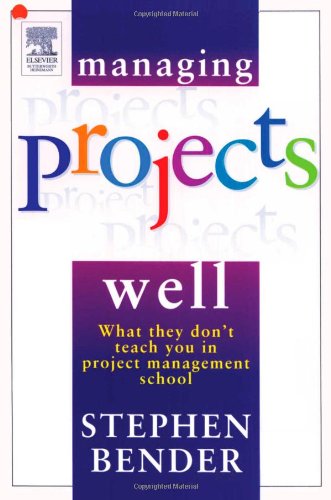
Managing Projects Well: What they don't teach you in project management school - 2nd edition - PDF
نویسندگان: خلاصه: Few people realise how many projects people actually manage. Or how many of the theoretical approaches to Project Management do not meet the test of the real world. This intensive look at Project Management teaches people what they need to know to lead, or be a member of, a project team. Most Project Management texts deal predominantly with technical areas, leaving readers ill-prepared for the real world. Managing Projects Well looks closely at the behavioural aspects of project management and project team participation. Managing Projects Well shows:What happens when your boss decides the project's schedule and budget, and you have to work backwards to make things fitHow to communicate and present effectively within and beyond the teamHow to cope when you do all the work, and have to manage multiple projects and non-project time as wellHow to organise people for success , and develop ideal methods for team member motivationHow to change your own bad habits quicklyWhat to do when things go wrong More traditional areas of project management, such as planning, organising, leading, and controlling a project, are also covered.Stephen Bender has many years experience managing projects, both small and large. He specialises in teaching professional, technical and clerical staff the techniques of workflow management and project management. 'Hands on' approach to project managementFocuses on team members as well as leaders Focuses on small real-world projects - not the Channel Tunnel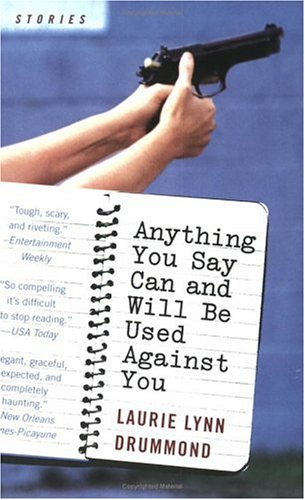
Anything You Say Can and Will Be Used Against You: Stories - PDF
نویسندگان: خلاصه: This riveting debut collection of short fiction about women cops comes from the author's real–life experience as a Baton Rouge police officer. In an entirely fresh and unique voice, these stories reveal the humanity, compassion, humour, tragedy and redemption hidden behind the "blue wall." Anything You Say Can and Will Be Used Against You centres on the lives of five female police officers. Each woman's story–like each call in a police officer's day–varies in its unique drama, but all the tales illuminate the tenuous line between life and death, violence and control, despair and salvation. Because the stories come from the author's own experience, they open a curtain on the truth behind the job–how officers are trained to deal with the smell of death, how violence clings to a crime scene long after the crime is committed, how the police determine when to engage in or diffuse violence, why some people make it from the academy to the force and some don't, and all the friendships, romances, and dramas that happen along the way. It illuminates not only how officers feel while they are in uniform, holding their guns, but also what they feel after they go home and put those guns aside.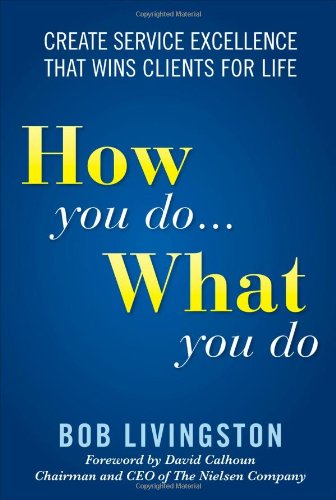
How You Do... What You Do: Create Service Excellence That Wins Clients For Life - PDF
نویسندگان: خلاصه: Between the challenges of escalating competition, well-informed clients, and dismal customer service, today's marketplace is becoming more and more crowded. The result is that your clients have more influence and choices than ever before. If you or your organization do not consistently satisfy and surpass their expectations, your clients will take their buying power elsewhere. It's that simple. But by establishing service excellence as your top strategic and cultural priority, you will foster the strong relationships needed to win--and retain--loyal clients. In this breakthrough book, customer service expert Bob Livingston gives you practical tools for transforming your approach to serving clients by strengthening “how you do what you do.” Whether you're a business leader, a client service executive, a sales manager, or an individual, you can differentiate yourself from competition by adopting Livingston's simple yet proven roadmap for achieving Service Excellence. In How You Do . . . What You Do, Livingston imparts a clear, step-by-step blueprint for transforming your culture, attitudes, and behaviors by illustrating how to: Develop and live your Purpose and Values Understand your clients' soft needs, and create plans to satisfy them Seek continuous improvement by stimulating creativity and innovation Keep your service-oriented culture growing Create a passion for Service Excellence Livingston draws upon a lifetime of experience in which he has achieved measurable success helping many companies shape their service cultures--most notably CROSSMARK, an international consumer products sales and marketing agency, whose remarkable transformation stands out as one of the strongest proof statements for this methodology. Throughout, Livingston benchmarks other great companies renowned for their service excellence, including Accenture, Henry & Horne, ECRM, The Nielsen Company, TBWA\Worldwide, Four Seasons, and many others. Properly executed, this compelling and inspirational approach to service virtually guarantees the client loyalty that will set you apart from competition, and distinguish you by How You Do . . . What You Do.
Is There a Book in You? - PDF
نویسندگان: خلاصه: Many people feel they might have a book in them - but how do you know whether you have what it takes to be a writer, whether your writing is any good, what you should write about and whether you should dedicate proper time to begin your dream? This book asks pertinent questions of you via a questionnaire to help you discover whether there is a talented writer in you. Each chapter provides background to the relevant point in the questionnaire. Packed with advice from experienced writers including known authors; P D James, Philip Pullman, Jacqueline Wilson, Margaret Drabble, Katie Fforde and more. Expert advice from Daniel Roche (BA President), independent booksellers, publishers Helen Fraser (Penguin) and Ian Trewin (Chairman Cheltenham Literary Festival and administrator, Man Booker Prize), agents and creative writing tutors. Foreword by columnist and writer Katharine Whitehorn.
You and Your Action Research Project - PDF
نویسندگان: خلاصه: This book gives practical guidance on doing an action research project as part of an award-bearing course. Packed with useful advice, it takes the practitioner-researcher through the various stages of a project, from action planning to writing the report. It deals comprehensively with gathering and interpreting the data, and also with issues concerning the criteria by which action research reports are judged. This book is thoroughly practical, and will encourage readers to try out new strategies for improving their work.Action research is firmly established on award-bearing courses in INSET and Continuing Professional Development. This book is essential reading for resource managers in schools, college and higher education who are responsible for providing courses and support.آیا کتاب مورد نظر هنوز بر روی سایت قرار نگرفته است؟ جای نگرانی نیست! کافی است بر روی گزینه سفارش کتاب کلیک کرده و درخواست خود را ثبت کنید. در کمتر از چند ساعت کتاب شما را آماده خواهیم کرد.