موضوعات
آموزش و پرورش
ادبیات و زبان
پزشکی، دندانپزشکی و داروسازی
تاریخ و جغرافیا
داستان و رمان
دیگر
دین و فلسفه
روانشناسی
ریاضیات و آمار
سلامتی، تناسب اندام و رژیم غذایی
شیمی و پلیمر
علوم اجتماعی و حقوق
علوم زیستی و بیوتکنولوژی
فیزیک و نجوم
کامپیوتر و اینترنت
کتابهای کودکان و داستان
کسب و کار و اقتصاد
کشاورزی و دامپزشکی و غذا
معماری
مهندسی و فناوری
هنر و تئاتر
محصولات

Our Hopes, Our Future: Insights from the Hope Barometer - Original PDF
نویسندگان: خلاصه: The results of the Hope Barometer for the years 2019 and 2020 sketch a rather dark future full of crises and show the psychological consequences of such sce- narios. If we as individuals and as a society are to flourish, we need images of a hopeful world that will promote our commitment and cohesion. But what does it take to ignite the flame of hope for a livable future together without a naive optimism trivializing and playing down the current problems? Hope contains the belief in a better world but also the recognition of obstacles and the moti- vation to act. This book presents the phenomenon of hope in connection with individual psychological findings and socially relevant developments. After the psychological basics of future thinking, the general expectations and wishes for the future of around 10,000 people from fourteen countries are presented. The experiences of the Corona pandemic give hope because they show how people can deal successfully with crises. This results in the importance and character of individual and social hope.
Preventing and Healing Climate Traumas: A Guide to Building Resilience and Hope in Communities - Original PDF
نویسندگان: خلاصه: Acknowledgments ix About the Author xi Introduction 1 Part I A Public Health Approach is Required to Build Population-Level Capacity for Mental Wellness and Transformational Resilience for the Long Climate Emergency 17 1 Climate Overshoot “101” 19 2 The Causes and Consequences of Individual, Community, and Societal Traumas 36 3 Elements of a Public Health Approach to Enhancing Mental Wellness and Transformational Resilience for the Long Climate Emergency 54 Part II Organizing and Operating Community-Based Initiatives that Build Universal Capacity for Mental Wellness and Transformational Resilience 73 4 Get Organized 77 5 Begin Building Community Capacity for Mental Wellness and Transformational Resilience 100 6 Establish RCC Goals, Objectives, Strategies, and Action Plans 116 Part III The Five Foundational Areas RCCs Must Emphasize to Enhance Universal Mental Wellness and Transformational Resilience for the Climate Emergency 127 7 Build Social Connections across Boundaries in the Community 129 8 Ensure a Just Transition by Creating Healthy, Safe, Just, and Equitable Climate-Resilient Local Physical/ Built, Economic, and Ecological Conditions 147 9 Cultivate Universal Literacy about Mental Wellness and Resilience 170 10 Foster Engagement in Specific Practices that Support Mental Wellness and Resilience 183 CONTENTS x Contents 11 Establish Ongoing Opportunities for Residents to Heal Their Distresses and Traumas 203 12 Continually Track Progress, Learn, Improve, and Plan for the Long Term 215 Conclusion: The Need for a Global Movement to Enhance Universal Capacity for Mental Wellness and Transformational Resilience for the Civilization-Altering Climate Emergency 228 Index 235
Indigenous Resistance in the Digital Age: On Radical Hope in Dark Times - Original PDF
نویسندگان: خلاصه: 1 CHAPTER 1 Introduction: Wild Things Written with my mountain home and First custodians Aki Nabalu and Odu Nabalu This is a chapter about place and Indigenous resistance. I am writing out of the politics of the two homelands I occupy in my mind as an Indigenous woman moving between two worlds. My voice is the bridge between two worlds. Places are never captured precisely in words or pictures. They are always more. Mount Kinabalu, the highest peak on Borneo island, is dotted with rock edges. Before it was damaged by an earthquake in 2015, one rockface took the shape of a donkey’s ear and was named so. It was the image that came to mind for the person who named it long ago but I have to say: What a diminutive title! I have to muse when this person looked up to that enor- mous pinnacle whether he heard a donkey’s ‘hee-haw’ braying down to him. Conservationist David Attenborough climbed Mount Kinabalu in 1975, describing a landscape of magical beauty. Granite pinnacles jutted skyward. The sky seemed to move as you climbed, as did the rockpools at the peak reflecting the stars. We learn the ascent was challenging, that nature came bearing gifts. Wild myrtle, rhododendrons, orchids, ferns. © The Author(s), under exclusive license to Springer Nature Switzerland AG 2022 O. Guntarik, Indigenous Resistance in the Digital Age, https://doi.org/10.1007/978-3-031-17295-3_1 2 Fig. 1.1 Mount Kinabalu from Kundasang. My grandfather Tumbaki, my mother Molly and my aunty Wendy. Photo credit Moffen Gondoloi Gifts that carried not just life but ominous signs. Pitcher plants shimmered with poison water, tricking insects in a dance of death. And so we learn of nature’s realities. Life and death, doom and gloom, smoldering side-by-side. Words. Pictures. A perspective from high up. Reading his words today, Attenborough’s (1975) nature walk up the mountain rumbles with sound. Frogs bleeeerrk-bleeeerrk at the lower reaches. Birds trill louder and louder farther up the trail. Birds in this part of the world do not fly away on approach; so tame, they scurry at the walker’s feet in a cheeky game of chasey. Come play with us, the birds seem to sing. At the top, where I imagine the walkers resting, perhaps stooping to drink water from mirrored rockpools, the icy wind cuts through bodies razor sharp. But oh how the top is worth the hike! The panorama magnifi- cent—even as you become more conscious of your breath, wind howling in your ears. Imagine this: terrestrial moss, lichen, liverwort, tiny trees clinging to rock icicles for dear life. Imagine the sounds and sights, sacred custodian of my homeland Aki Nabalu tells me. O. GUNTARIK 3 Let us consider this and listen, sings another custodian Oku Nabalu. Both of them are caretakers of this mountain place. My original home. Custodian ancestors help us tell the histories of place and the legacies of our survival. They are our original storytellers. They evidence the ways storytelling pioneer modes of knowing, merging animal and human, the wild and the tame, nature and machine to draw attention to the political dimensions of our existence (see Seton 1898; Cloos 1954; Carson 1962). This politics draws out the musical nature of stories to crystallize purpose and meaning. Listen to the words, for instance, of Australian poet Eileen Chong (2021, 73). ‘There is merit// in quietude, in the precise layering of sound, /image, and object. In the simple acts of walking, /waiting/and witnessing’. A precision to sound, image, object. An intention. Image and object and language come into play for me too. Words offer ways to see, to hear, to read the landscape. The world tilts like an optical illusion or like the multicoloured gems in a child’s kaleidoscope into new configurations of speech. Poets sculpt history into story. So I must pose new questions of life, nature and humankind. I am that tree clinging to bare life on the mountain. Maybe it takes more balls to survive and to talk this way. We need a new way to think about theory, to bring ideas into practice and the world. Praxis we might say. Activism working with reflection, as Paulo Freire (1968) claims. So I am reflecting with Attenborough and the First Custodians on a “sound walk” up a mountain ridge that today rises above a surrounding plateau of a disappearing jungle with a disconcerting backdrop. Dwindling rice plantations. An invasive eyesore of African palm. This is also the home- land of my ancestors: Dusun people, an Indigenous hilltribe of Borneo who were once subsistence farmers. Who share land with the governing Malay, and multiple generations of Indian and Chinese migrants, along with more than sixty Indigenous groups. It is an incisive and empowering moment in my readings of walks through the wilderness, reseeing a don- key’s ear and ‘other peaks...labelled rather unimaginatively...I could not help reflecting that local Dusun names would have been far more appro- priate and musical.’ Attenborough’s words (1975, 103).
When the Diagnosis Is Multiple Sclerosis: Help, Hope, and Insights from an Affected Physician - Original PDF
نویسندگان: خلاصه: THE NAME , “MULTIPLE SCLEROSIS ” I have a very hard time with the name of this illness—“multiple sclerosis.” It has such a horrific sound to it. Even after seven years, I rarely say the words multiple sclerosis aloud. I much prefer the more appealing sound of MS. In speaking to others with multiple sclerosis (MS), I have learned that I am not alone with this preference. At the time I was diagnosed, I was somewhat familiar with this illness, hav- ing intermittently cared for multiple sclerosis patients in the hospital. Most of the patients I had seen were diagnosed with MS in the 1970s or 1980s, a time when medication for relapse prevention was not yet available. Others, who were frequently in the hospital, had a variant of MS called “primary progressive multiple sclerosis,” which can lead to significant disability fairly quickly. As a physician, I thought their situations were so very sad, as many patients had developed poor functioning of their arms, legs, bladder, or speech. I rarely had the opportunity to see the MS patients who had very little disability, since they were seen in the outpatient setting. So when I finally had it con- firmed, that yes, these bizarre symptoms I had been having were in fact due to multiple sclerosis, I conjured up the worst possible images of what might happen to me. While many of you may not have had the opportunity to meet patients with more advanced stages of MS, I suspect that your reaction to the diagnosis of MS may have been quite similar to mine. Many people still carry an image of multiple sclerosis as an illness that picks an individual out of the prime of his or her life, and leaves that person wheelchair bound and severely disabled. Fortunately, for the majority of women and men who are newly diagnosed with relapsing–remitting MS in the new millennium, this is not an inevitable outcome. And yet, while we know that medications now exist to prevent relapses, this knowledge does not necessarily make the initial journey any 2 When the Diagnosis Is Multiple Sclerosis easier. We did not sign up for this club. We did not ask to play this game. The anger, the grief, and the uncertainty about the future can be overwhelming. Give yourself time. It will be possible to feel in control again.
Hope for a Heated Planet: How Americans Are Fighting Global Warming and Building a Better Future - Original PDF
نویسندگان: خلاصه: am finishing this book in the final days of the George W. Bush adminis- tration. For those of us who love the environment and long for peace, it has been a dark time. Through it, I have often thought of the words of the poet Theodore Roethke that I first heard from scholar and activist Robert Jay Lifton: “In a dark time, the eye begins to see.” The first light of dawn is now visible as the Democratic candidate, Senator Barack Obama, pushed by a growing grassroots movement, embraces action on climate change. To a lesser degree, though far more than President Bush, so does the Republican contender, Senator John McCain. That was far from the case when I began this project at the height of the president’s wartime popularity. This has turned out to be a book as much about hope and democracy as it is about global warming. Its central theme is that you and I can change history. What we believe, what actions we take, actually matter. It is an idea central to democracy. And it should give us hope. I disagree, strongly, with those who believe the American public has turned into a hopeless gaggle of consumers and couch potatoes who are content to let others rule their lives—or destroy the planet. At the height of President Bush’s popularity and influence it may have appeared that way. But national security and environmental degradation (especially global climate change) are complex, difficult, and abstract sub- jects. It has taken some time for us Americans to grasp the gravity of our situation, from melting ice caps to Iraq. This is especially true when our media mostly cover the White House and the Pentagon—regardless of the occupants—and report each utterance as gospel. Meanwhile, most of us are busy with jobs, families, and problems near home that we can actually see and do something about. The result has been that global warming—caused by the vast outpour- x P REFACE ings of carbon dioxide (CO2) and other pollutants from our cars, buildings, and factories—has increased and is picking up speed. But at the same time, so has a growing and revived environmental movement. It is joined now with new allies from the religious community, business, labor, medical and public health professionals, educators, and more. This new climate move- ment has deep roots in the big environmental groups, too often ignored or derided, that have been working to warn us and prevent global climate change since the elder George Bush’s administration in the 1980s. Their work is now bearing fruit. The public is becoming aroused and engaged. And, as a result, we will have a new, much more climate-friendly president and Congress in 2009. This book tells that story and also ex- plains the basics of climate change and its effects on human health and well-being—not just on polar bears and penguins. But Hope for a Heated Planet is finally about solutions to our dilemma. I’ve tried to give you the best steps you can take, both personal and political, to make a difference and to get involved. Like most authors, I like to imagine, of course, that our new president will take to heart every word I have poured out here. But even more impor- tant is that you do. My mother, Margaret Kirkland Musil, died after ninety- one wonderful years as I was writing. She taught me to love life, to love nature, to learn, to have faith, and to act on my beliefs. My first grandchild, Catherine Kirkland Unruh, was born shortly after. She will need the same lessons. So will all our children and grandchildren. Global climate change, we now know, can be prevented by building a vi- brant, healthy economy that does away with the belching furnaces, smoke- stacks, and combustion engines from the outmoded technologies of the nineteenth and twentieth centuries. But in a democracy, that will depend not on our new president, or the one after that. It is up to us. And the signs now are that many, many citizens and their organizations in this great na- tion are indeed aroused. But to prevail, we will need even more. That is really why I have written. I want you and your family and friends to join with me and millions of other Americans in making history. Nobody else can, or should, do it for you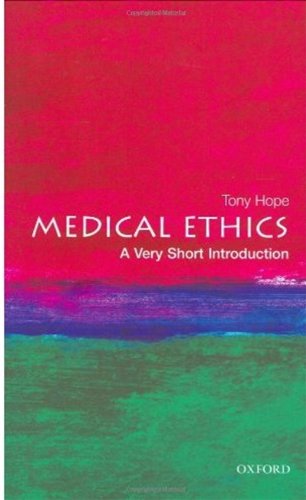
Medical Ethics A Very Short Introduction Tony Hope - Original PDF
نویسندگان: خلاصه: The fox represents those who pursue many ends, often unrelated and even contradictory, connected, if at all, only in some de facto way, . . . [who] lead lives, perform acts, and entertain ideas that are cen- trifugal rather than centripetal . . . seizing upon the essence of a vast variety of experiences . . . without . . . seeking to fit them into . . . any one unchanging, all-embracing, . . . unitary inner vision. Berlin gives as examples of hedgehogs: Dante, Plato, Dostoevsky, Hegel, Proust, amongst others. He gives as examples of foxes: Shakespeare, Herodotus, Aristotle, Montaigne, and Joyce. Berlin goes on to argue that Tolstoy was a fox by nature but believed in being a hedgehog. 4 Medical Ethics 2. Are you a hedgehog or a fox? I am a fox, or at least would like to be. I admire the intellectual rigour of those who try to produce a unitary vision, but I prefer the rich, contradictory, and sometimes chaotic visions of Berlin’s foxes. I do not, in this book, attempt to approach the various problems I discuss from one single moral theory. Each chapter considers an issue on which I argue for a particular position, using whatever methods of argument seem to me to be the most relevant. I have covered different areas in different chapters: genetics, modern reproductive technologies, resource allocation, mental health, medical research, and so on; and have looked at one issue in each of these areas. At the end of the book I guide the reader to other issues and further reading. The one perspective that is common to all the chapters is the central importance of reasoning and reasonableness. I believe that medical ethics is essentially a rational subject: that is, it is all about giving reasons for the view that you take, and being prepared to change your views on the basis of reasons. That is why one chapter, in the middle of the book, is a reflection on various tools of rational argument. But although I believe in the central importance of reasons and evidence, even here the fox in me sounds a note of caution. Clear thinking, and high standards of rationality, are not enough. We need to develop our hearts as well as our minds. Consistency and moral enthusiasm can lead to bad acts and wrong decisions if pursued without the right sensitivities. The novelist, Zadie Smith, has written: There is no bigger crime, in the English comic novel, than thinking you are right. The lesson of the comic novel is that our moral enthusiasms make us inflexible, one-dimensional, flat. This is a lesson we need to take into any area of practical ethics, including medical ethics. What better place to start this tour of medical ethics than at the end, with the thorny issue of euthanasia? 6 Medical Ethics Chapter 2 Euthanasia: good medical practice, or murder? Good deeds do not require long statements; but when evil is done the whole art of oratory is employed as a screen for it. (Thucydides) The practice of euthanasia contradicts one of the oldest and most venerated of moral injunctions: ‘Thou shalt not kill’. The practice of euthanasia, under some circumstances, is morally required by the two most widely regarded principles that guide medical practice: respect for patient autonomy and promoting patient’s best interests. In the Netherlands and Belgium active euthanasia may be carried out within the law. Outline of the requirements in order for active euthanasia to be legal in the Netherlands 1. The patient must face a future of unbearable, interminable suffering. 2. The request to die must be voluntary and well-considered. 3. The doctor and patient must be convinced there is no other solution. 4. A second medical opinion must be obtained and life must be ended in a medically appropriate way.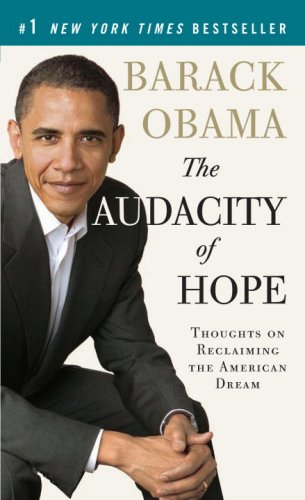
The Audacity of Hope. Thoughts on Reclaiming the American Dream - Original PDF
نویسندگان: خلاصه: Republicans and Democrats ON MOST DAYS, I enter the Capitol through the basement. A small subway train carries me from the Hart Building, where my office is located, through an underground tunnel lined with the flags and seals of the fifty states. The train creaks to a halt and I make my way, past bustling staffers, maintenance crews, and the occasional tour group, to the bank of old elevators that takes me to the second floor. Stepping off, I weave around the swarm of press that normally gathers there, say hello to the Capitol Police, and enter, through a stately set of double doors, onto the floor of the U.S. Senate. The Senate chamber is not the most beautiful space in the Capitol, but it is imposing nonetheless. The dun-colored walls are set off by panels of blue damask and columns of finely veined marble. Overhead, the ceiling forms a creamy white oval, with an American eagle etched in its center. Above the visitors’ gallery, the busts of the nation’s first twenty vice presidents sit in solemn repose. And in gentle steps, one hundred mahogany desks rise from the well of the Senate in four horseshoe-shaped rows. Some of these desks date back to 1819, and atop each desk is a tidy receptacle for inkwells and quills. Open the drawer of any desk, and you will find within the names of the senators who once used it—Taft and Long, Stennis and Kennedy—scratched or penned in the senator’s own hand. Sometimes, standing there in the chamber, I can imagine Paul Douglas or Hubert Humphrey at one of these desks, urging yet again the adoption of civil rights legislation; or Joe McCarthy, a few desks over, thumbing through lists, preparing to name names; or LBJ prowling the aisles, grabbing lapels and gathering votes. Sometimes I will wander over to the desk where Daniel Webster once sat and imagine him rising before the packed gallery and his colleagues, his eyes blazing as he thunderously defends the Union against the forces of secession. But these moments fade quickly. Except for the few minutes that it takes to vote, my colleagues and I don’t spend much time on the Senate floor. Most of the decisions— about what bills to call and when to call them, about how amendments will be handled and how uncooperative senators will be made to cooperate—have been worked out well in advance by the majority leader, the relevant committee chairman, their staffs, and (depending on the degree of controversy involved and the magnanimity of the Republican handling the bill) their Democratic counterparts. By the time we reach the floor and the clerk starts calling the roll, each of the senators will have determined—in consultation with his or her staff, caucus leader, preferred lobbyists, interest groups, constituent mail, and ideological leanings—just how to position himself on the issue. It makes for an efficient process, which is much appreciated by the members, who are juggling twelve- or thirteen-hour schedules and want to get back to their offices to meet constituents or return phone calls, to a nearby hotel to cultivate donors, or to the television studio for a live interview. If you stick around, though, you may see one lone senator standing at his desk after the others have left, seeking recognition to deliver a statement on the floor. It may be an explanation of a bill he’s introducing, or it may be a broader commentary on some unmet national challenge. The speaker’s voice may flareRip by XmosRips with passion; his arguments—about cuts to programs for the poor, or obstructionism on judicial appointments, or the need for energy independence—may be soundly constructed. But the speaker will be addressing a near-empty chamber: just the presiding officer, a few staffers, the Senate reporter, and C-SPAN’s unblinking eye. The speaker will finish. A blue-uniformed page will silently gather the statement for the official record. Another senator may enter as the first one departs, and she will stand at her desk, seek recognition, and deliver her statement, repeating the ritual. In the world’s greatest deliberative body, no one is listening
Adaptive Optics for Vision Science Principles Practices Design and Applications - Original PDF
نویسندگان: خلاصه: The high transverse resolution of retinal imaging systems equipped with adaptive optics provides a unique opportunity to record these eye move- ments with very high accuracy. Putnam et al. showed that it is possible to record the retinal location of a fixation target on discrete trials with an error at least 5 times smaller than the diameter of the smallest foveal cones [63]. We used this capability to measure the standard deviation of fixation positions FIGURE 1.7 Images of the cone mosaics of 10 subjects with normal color vision, obtained with the combined methods of adaptive optics imaging and retinal densi- tometry. The images are false colored so that blue, green, and red are used to repre- sent the S, M, and L cones, respectively. (The true colors of these cones are yellow, purple, and bluish-purple). The mosaics illustrate the enormous variability in L/M cone ratio. The L/M cone ratios are (A) 0.37, (B) 1.11, (C) 1.14, (D) 1.24, (E) 1.77, (F) 1.88, (G) 2.32, (H) 2.36, (I) 2.46, (J) 3.67, (K) 3.90, and (L) 16.54. The proportion of S cones is relatively constant across eyes, ranging from 3.9 to 6.6% of the total population. Images were taken either 1° or 1.25° from the foveal center. For two of the 10 subjects, two different retinal locations are shown. Panels (D) and (E) show images from nasal and temporal retinas, respectively, for one subject; (J) and (K) show images from nasal and temporal retinas for another subject. Images (C), (J), and (K) are from Roorda and Williams [52]. All other images were made by Heidi Hofer. (See insert for a color representation of this figure.) (From Williams and Hofer [57]. Reprinted with permission from The MIT Press.) across discrete fixation trials, obtaining values that ranged from 2.1 to 6.3 arcmin, with an average of 3.4 arcmin, in agreement with previous studies [63, 64]. Interestingly, the mean fixation location on the retina was displaced from the location of highest foveal cone density by an average of about 10 arcmin (as shown in Fig. 1.8), indicating that cone density alone does not drive the location on the retina selected for fixation. This method may have interesting future applications in studies that require the submicron registra- tion of stimuli with respect to the retina or delivering light to retinal features as small as single cells. Whereas the method developed by our group can only record eye position on discrete trials, Scott Stevenson and Austin Roorda have shown that it is possible to extract continuous eye movement records from video-rate images obtained with an adaptive optics scanning laser ophthalmoscope (AOSLO) [66]. Eye movements cause local warping of the image within single video frames as well as translation between frames. The warping and translation information in the images can be used to recover a record of the eye move- ments that is probably as accurate as any method yet devised. This is illus- trated in Figure 1.9, which compares the eye movement record from the AOSLO with that from a Dual Purkinje Eye Tracker. The noise in the AOSLO trace is on the order of a few arc seconds compared to about a minute of arc for the Dual Purkinje Eye Tracker. Note also the greatly reduced overshoot following a saccade in the AOSLO trace. These overshoots are thought to be partly artifacts caused by lens wobble following the saccade and do not reflect the true position of the retinal image. The AOSLO is not susceptible to this artifact because it tracks the retinal position directly rather than relying on reflections from the anterior optics.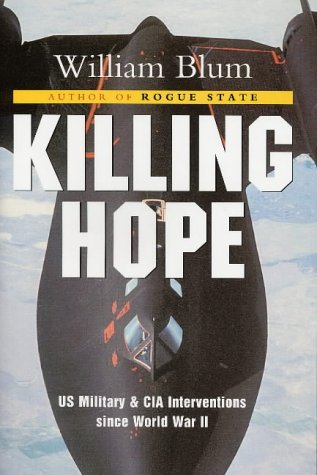
Killing Hope_ US Military and CIA Interventions Since World War II. Part 1-Zed Books Ltd (2003) - Original PDF
نویسندگان: خلاصه: Introduction A Brief History of the Cold War and Anti-communism Our fear that communism might someday take over most of the world blinds us to the fact that anti- communism already has. —Michael Parenti1 It was in the early days of the fighting in Vietnam that a Vietcong officer said to his American prisoner: "You were our heroes after the War. We read American books and saw American films, and a common phrase in those days was "to be as rich and as wise as an American". What happened?"2 An American might have been asked something similar by a Guatemalan, an Indonesian or a Cuban during the ten years previous, or by a Uruguayan, a Chilean or a Greek in the decade subsequent. The remarkable international goodwill and credibility enjoyed by the United States at the close of the Second World War was dissipated country-by-country, intervention-by-intervention. The opportunity to build the war- ravaged world anew, to lay the foundations for peace, prosperity and justice, collapsed under the awful weight of anti-communism. The weight had been accumulating for some time; indeed, since Day One of the Russian Revolution. By the summer of 1918 some 13,000 American troops could be found in the newly-born Union of Soviet Socialist Republics. Two years and thousands of casualties later, the American troops left, having failed in their mission to "strangle at its birth" the Bolshevik state, as Winston Churchill put it.3 The young Churchill was Great Britain's Minister for War and Air during this period. Increasingly, it was he who directed the invasion of the Soviet Union by the Allies (Great Britain, the US, France, Japan and several other nations) on the side of the counter-revolutionary "White Army". Years later, Churchill the historian was to record his views of this singular affair for posterity: Were they [the Allies] at war with Soviet Russia? Certainly not; but they shot Soviet Russians at sight. They stood as invaders on Russian soil. They armed the enemies of the Soviet Government. They blockaded its ports, and sunk its battleships. They earnestly desired and schemed its downfall. But war—shocking! Interference—shame! It was, they repeated, a matter of indifference to them how Russians settled their own internal affairs. They were impartial—Bang!4 What was there about this Bolshevik Revolution that so alarmed the most powerful nations in the world? What drove them to invade a land whose soldiers had recently fought alongside them for over three years and suffered more casualties than any other country on either side of the World War? The Bolsheviks had had the audacity to make a separate peace with Germany in order to take leave of a war they regarded as imperialist and not in any way their war, and to try and rebuild a terribly weary and devastated Russia. But the Bolsheviks had displayed the far greater audacity of overthrowing a capitalist- feudal system and proclaiming the first socialist state in the history of the world. This was uppityness writ incredibly large. This was the crime the Allies had to punish, the virus which had to be eradicated lest it spread to their own people. 6 The invasion did not achieve its immediate purpose, but its consequences were nonetheless profound and persist to the present day. Professor D.F. Fleming, the Vanderbilt University historian of the Cold War, has noted: For the American people the cosmic tragedy of the interventions in Russia does not exist, or it was an unimportant incident long forgotten. But for the Soviet peoples and their leaders the period was a time of endless killing, of looting and rapine, of plague and famine, of measureless suffering for scores of millions— an experience burned into the very soul of a nation, not to be forgotten for many generations, if ever. Also for many years the harsh Soviet regimentations could all be justified by fear that the capitalist powers would be back to finish the job. It is not strange that in his address in New York, September 17, 1959, Premier Khrushchev should remind us of the interventions, "the time you sent your troops to quell the revolution", as he put it.5 In what could be taken as a portent of superpower insensitivity, a 1920 Pentagon report on the intervention reads: "This expedition affords one of the finest examples in history of honorable, unselfish dealings ... under very difficult circumstances to be helpful to a people struggling to achieve a new liberty."6 History does not tell us what a Soviet Union, allowed to develop in a "normal" way of its own choosing, would look like today. We do know, however, the nature of a Soviet Union attacked in its cradle, raised alone in an extremely hostile world, and, when it managed to survive to adulthood, overrun by the Nazi war machine with the blessings of the Western powers. The resulting insecurities and fears have inevitably led to deformities of character not unlike that found in an individual raised in a similar life- threatening manner. We in the West are never allowed to forget the political shortcomings (real and bogus) of the Soviet Union; at the same time we are never reminded of the history which lies behind it. The anti-communist propaganda campaign began even earlier than the military intervention. Before the year 1918 was over, expressions in the vein of "Red Peril", "the Bolshevik assault on civilization", and "menace to world by Reds is seen" had become commonplace in the pages of the New York Times. During February and March 1919, a US Senate Judiciary Subcommittee held heatings before which many "Bolshevik horror stories" were presented. The character of some of the testimony can be gauged by the headline in the usually sedate Times of 12 February 1919: DESCRIBE HORRORS UNDER RED RULE. R.E. SIMONS AND W.W. WELSH TELL SENATORS OF BRUTALITIES OF BOLSHEV1KI— STRIP WOMEN IN STREETS—PEOPLE OF EVERY CLASS EXCEPT THE SCUM SUBJECTED TO VIOLENCE BY MOBS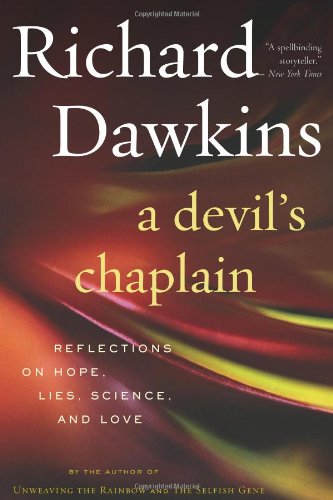
A devil's chaplain: reflections on hope, lies, science, and love - Original PDF
نویسندگان: خلاصه: The first essay in this volume, A Devil's Chaplain (1.1), has not previously been published. The title, borrowed by the book, is explained in the essay itself. The second essay, What is True? (1.2), was my contribution to a symposium of that name, in Forbes ASAP magazine. Scientists tend to take a robust view of truth and are impatient of philosophical equivocation over its reality or importance. It's hard enough coaxing nature to give up her truths, without spectators and hangers-on strewing gratuitous obstacles in our way. My essay argues that we should at least be consistent. Truths about everyday life are just as much - or as little - open to philosophical doubt as scientific truths. Let us shun double standards. At times I fear turning into a double standards bore. It started in child- hood when my first hero, Doctor Dolittle (he returned irresistibly to mind when I read the Naturalist's Voyage of my adult hero, Charles Darwin), raised my consciousness, to borrow a useful piece of feminist jargon, about our treatment of animals. Non-human animals I should say, for, of course, we are animals. The moral philosopher most justly credited with raising today's consciousness in this direction is Peter Singer, lately moved from Australia to Princeton. His The Great Ape Project aims towards granting the other great apes, as near as is practically possible, civil rights equivalent to those enjoyed by the human great ape. When you stop and ask yourself why this seems so immediately ridiculous, the harder you think, the less ridiculous it seems. Cheap cracks like 'I suppose you'll need reinforced ballot-boxes for gorillas, then?' are soon dispatched: we give rights, but not the vote, to children, lunatics and Members of the House of Lords. The biggest objection to the GAP is 'Where will it all end? Rights for oysters?' (Bertrand Russell's quip, in a similar context). Where do you draw the line? Gaps in the Mind (1.3), my own contribution to the GAP book, uses an evolutionary argument to show that we should not be in the business of drawing lines in the first place. There's no law of nature that says boundaries have to be clear-cut.آیا کتاب مورد نظر هنوز بر روی سایت قرار نگرفته است؟ جای نگرانی نیست! کافی است بر روی گزینه سفارش کتاب کلیک کرده و درخواست خود را ثبت کنید. در کمتر از چند ساعت کتاب شما را آماده خواهیم کرد.