موضوعات
آموزش و پرورش
ادبیات و زبان
پزشکی، دندانپزشکی و داروسازی
تاریخ و جغرافیا
داستان و رمان
دیگر
دین و فلسفه
روانشناسی
ریاضیات و آمار
سلامتی، تناسب اندام و رژیم غذایی
شیمی و پلیمر
علوم اجتماعی و حقوق
علوم زیستی و بیوتکنولوژی
فیزیک و نجوم
کامپیوتر و اینترنت
کتابهای کودکان و داستان
کسب و کار و اقتصاد
کشاورزی و دامپزشکی و غذا
معماری
مهندسی و فناوری
هنر و تئاتر
محصولات

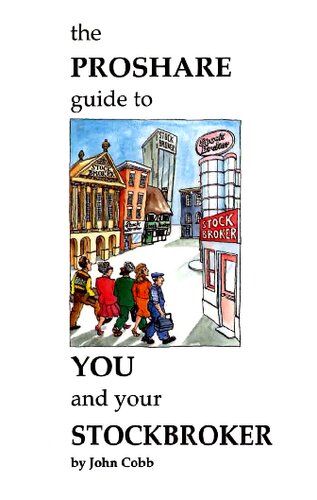
The ProShare Guide to You and Your Stockbroker - PDF
نویسندگان: خلاصه: I have never written a book before: it has been a newexperience which I have greatly enjoyed. But any success ishardly mine. I am grateful to Cathy Gunn who not only wroteinitially from my long and rambling synopsis but who has alsoput up so patiently with my later insertions of large chunks ofCobb-prose which she has skilfully turned into English.I have tried to look at the relationship between client andstockbroker from both points of view. After all, I was first aclient for a number of years. Then - as my wife Sue puts it sotruly - I proved to be such a pest that they invited me to jointhe firm so that I could answer my own questions! That I didfor 22 years and have now reached the dizzy height ofconsultant - the polite word for an ageing man on his way out.In fact, I now have a new challenge, as chairman of APCIMS,the trade association formed in 1990 to represent the interestsof private client stockbrokers. So I am even more involvedand even more concerned that a really good understanding isbuilt up between stockbrokers and clients. That is what thisbook is all about.I do hope that you will find that this book helps you. Itcannot answer all your questions but I hope it will stimulate5The ProS hare Guide to You and Your Stockbrokersome which you and your stockbroker can then answertogether.Once the framework between the client and thestockbroker is established and the relationship is under way,then it is a question of confidence - both ways - in that thestockbroker must understand your thinking and give you acracking good service and you must feel sure that thestockbroker is doing his best for you.At the end of the day, it boils down to mutual trust.One apology I need to make is to all the femalestockbrokers working throughout the country. I have referredthroughout the book to stockbrokers as male. But nodiscrimination is sought and "he" really means "he/she".I would be very interested to hear from readers with theircomments on this book - good, or bad! Please write to mec/o APCIMS, 20 Dysart Street, London EC2A 2BX.
Erotic Ambiguities: The Female Nude in Art - PDF
نویسندگان: خلاصه: Art is always ambiguous. When it involves the female body it can also be erotic. Erotic Ambiguities is a study of how contemporary women artists have reconceptualised the figure of the female nude. Helen McDonald shows how, over the past thirty years, artists have employed the idea of ambiguity to dismantle the exclusive, classical ideal enshrined in the figure of the nude, and how they have broadened the scope of the ideal to include differences of race, ethnicity, sexuality and disability as well as gender.McDonald discusses the work of a wide range of women artists, including Barbara Kruger, Judy Chicago, Mary Duffy, Zoe Leonard, Tracey Moffatt, Pat Brassington and Sally Smart. She traces the shift in feminist art practices from the early challenge to partriarchal representations of the female nude to contemporary, 'postfeminist' practices, influenced by theories of performativity, queer theory and postcoloniality. McDonald argues that feminist efforts to develop a more positive representation of the female body need to be reconsidered, in the face of the resistant ambiguities and hybrid complexities of visual art in the late 1990s.
Oh, the Places You'll Go! - PDF
نویسندگان: خلاصه: "Don't be fooled by the title of this seriocomic ode to success; it's not 'Climb Every Mountain,' kid version. All journeys face perils, whether from indecision, from loneliness, or worst of all, from too much waiting. Seuss' familiar pajama-clad hero is up to the challenge, and his odyssey is captured vividly in busy two-page spreads evoking both the good times (grinning purple elephants, floating golden castles) and the bad (deep blue wells of confusion). Seuss' message is simple but never sappy: life may be a 'Great Balancing Act,' but through it all 'There's fun to be done.'"--(starred) Booklist.
Punishment and Democracy: Three Strikes and You're Out in California (Studies in Crime and Public Policy X) - PDF
نویسندگان: خلاصه: The “Three strikes and you’re out” legislation adopted in Californiain 1994, was, at the same time, typical of recent American penalpolicy and decidedly unique. It is typical because of its orientation(long and mandatory terms of imprisonment), its devotion to sym-bolic gestures and slogans, and its willingness to displace discretionwith binding general commitments to particular punishments. TheCalifornia version was only 1 of 26 laws with that label passed in athree-year period during the 1990s, and the Three Strikes approachwas only 1 of many punitive reforms of the 1990s.What sets California’s law apart from the other Three Strikes lawsand every other penal law innovation of recent times is the extremityof its terms and the revolutionary nature of its ambitions. This statutewas drafted by outsiders to have the maximum possible impact oncriminal punishments. Whereas most penal laws are designed todeliver less drastic changes than they advertise—to bark louder thanthey bite—the California statute was designed to operate even morebroadly than its specialized title would suggest. It was a law de-signed to bite louder than it barked.The origin and impact of this legislation would have been an im-portant subject no matter which state had adopted it, but the settingfor the new law provided an even more compelling case for a majorstudy. The state of California is one of the largest criminal justice sys-tems in the free world. Its prisons and jails held almost a quarter of amillion inmates before the new law took effect. The California prisonsystem had grown more than fivefold in the 14 years prior to ThreeStrikes and already was larger than any prison system in the Westernworld. This was not only an extreme experiment but also one imple-mented in a very large and greatly expanded system.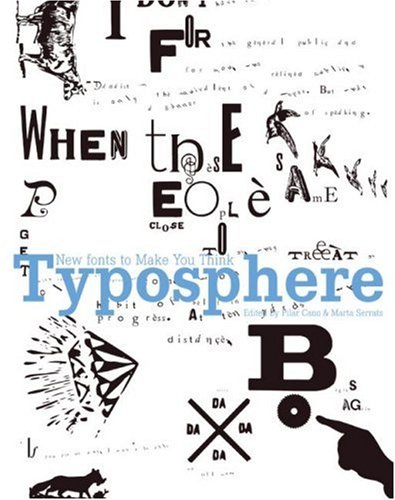
Typosphere: New Fonts to Make You Think - PDF
نویسندگان: خلاصه: Intheearlyl990s,ahugenumberofgraphicdesignerslaunchedthemselvesintocreatingtypefaces.BoththetechnologicalrevolutionthatprecededtheappearanceofthefirstMacintoshcomputer,in1984,andthedevelopmentofrelativelyuser-friendlytypeface-productionsoftwareencouragedmanydesignerstoenterafieldthatwaspreviouslylimitedtohighlyexperiencedprofessionals.Theappearanceofthecomputerbroughtwithitagreatersenseoffreedom,anditallowedthegraphicdesignworldingeneraltoexploretheapparentlynonexistentlimitsofthisnewtechnology.Largenumbersofcreatorsgeneratedmassesofbizarrepieces,mostlyofanexperimentalnature,andthefreneticrhythmofproductioninevitablyaffectedtheirquality,bothingraphicandtypefacedesign.However,fromthistechnologicalrevolution,likeallrevolutions,arosearelativelyshortperiodofenergetic,large-scaleproduction,whichcametoanendasquicklyasithadstarted.Bytheendofthe1990stheworldofgraphicdesignhadsettleddown.Thoseexperimentingwithtypedesignreturnedtographics;somewentontoWebdesign,thenextrevolution,andtypefacedesignersruledtheroostonceagain.Thisreturntospecializationisdueinparttotheappearanceofmorecomplextypeface-productionsoftware,whichrequiredtech-nicalsophistication.Unicode,forexample,isanencodingsystemwhichcanidentifytheglyphsthateachtypefacecontains.Itlocatesaspecificglyphinatypeface'sdatabase,whenthattypefaceisused.OpenType,aprojectstartedin1995anddevelopedbybothMicrosoftandAdobe,actuallyproducedanewtypefaceformat,which,inreality,isahybridofexistingformatsandnewextensions.OpenTypeisaversatileformat,compatiblewithbothplatforms—MacandPC—whichalsoallowsthedevelopmentoflargecharactersets.Asinglefontmaycontainupto65,000glyphscomparedtoaprevious256.Thisfeaturefavorsthedevelopmentoftypefacesthatcontainvariouswritingsystemswithinasinglefont.Italsoallowsthepro-ductionofcomplexwritingsystems,suchasJapanese,whichusestwosyllabicalphabets,hiraganaandkatakana;oneideographic,kanji;and,inrecentyears,theso-calledromaji,orLatinalphabet.OpenTypealsoallowsuserstoaddotherfeatures,suchassmallcapitals,alternativecharacters,ligatures,OldStylefiguresandothers—attributesthatpreviouslyhadtobeseparatedintodiffer-ent"expert"fonts,whichwereaimedatprofessionalgraphicdesigners.Inshort,thesenewtechnologieshaveonceagainlimitedtypefacedesigntoprofessionalswithanin-depthknowledgeofboththenewtoolsandthetraditionaltechniques.Soanyonecreatingnewfontsthesedaysisdoingmuchmorethanmerelycreatingattractiveshapes.InthewordsofPaulRenner:"Heedthisprofessionals:Typefacedesignistechnology,anditisart."
Drug Transporters: Molecular Characterization and Role in Drug Disposition (Wiley Series in Drug Discovery and Development) - PDF
نویسندگان: خلاصه: Transporters are membrane proteins that span cellular membranes and are the gate-keepers for all cells and organelles, controlling the intake and efflux of crucial en-dogenous substrates such as sugars, amino acids, nucleotides, and inorganic ions.The specificity of many transporters is not, however, limited to their physiologicalsubstrates, and for some, their physiological substrates remain undiscovered. Xeno-biotics (i.e., drugs, dietary and environmental compounds) have the potential to berecognized by transporters, which crucially influence the absorption, distribution, andelimination of drugs in the body.Due to their hydrophobic nature and relatively low abundance, the molecular iden-tification of transporters had been a difficult task until the development of the expres-sion cloning technique for transporters in the early 1990s. This powerful approach,combined with recent genome analysis, has facilitated the identification and charac-terization of numerous transporters that are important in drug disposition.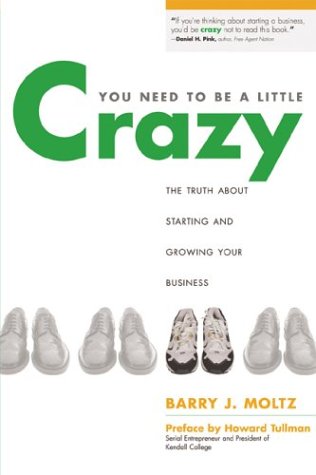
You Need to Be a Little Crazy: The Truth about Starting and Growing Your Business - PDF
نویسندگان: خلاصه: Advice about starting a business never sounded like this! Beginning with "you must be crazy," serial entrepreneur and angel investor Barry Moltz offers the true insider’s scoop on new business start-ups. With doses of irreverence and humor, the return-to-basics guide focuses on what comes before the bottom line. Addressing passion-the ultimate entrepreneurial fuel-relationships, failure, and authenticity, Moltz incorporates stories from his entrepreneurial colleagues and shows what it takes to integrate personal and professional life to achieve the highest satisfaction. Moltz describes the ups and downs and emotional trials of running a start-up business and invites readers to let go of the myths and expectations that can hamstring them emotionally while getting their businesses up and running. In a helpful, heartfelt, and often humorous way, Moltz reassures entrepreneurs that they are not alone-whatever their form of craziness-and that they can retain self-worth and sanity as they ride the start-up roller coaster. Showcasing the varieties of new venture craziness, entrepreneurs at all ages and stages in their business-building processes will realize they too can succeed. Jolts of passionate entrepreneurial wisdom energize these anecdotes, with such ideas as: • People-not capital-are the true currency. • Passion keeps everything going. • Relationships and authenticity are the drivers in this business climate. • There is no perfect idea and no magic bullet. • Don‘t expect your path to be a straight line. Incorporating lessons from the boom and bust 1990s, the realignment of business and personal values in the wake of terrorism, and proven ways to nurture the human dimension in business, these are voices to help all business owners find and trust their own entrepreneurial passions. After all, says the author, "The worst they can do is eat you!"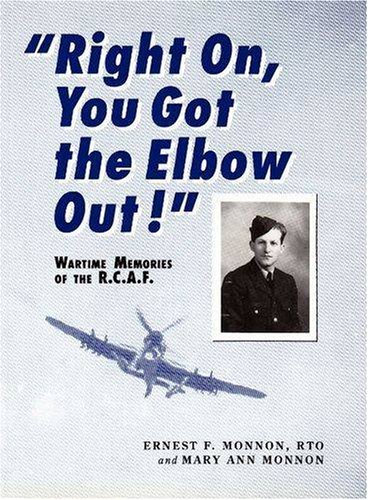
Right on, You Got the Elbow Out!: Wartime Memories of the Rcaf - PDF
نویسندگان: خلاصه: During World War II, thousands of Canadians left our country to fight for our Allies. Where they went and what they did has always been a question for some. Perhaps this book will give some answers. It deals with the experiences of an ordinary airman, a radio telephone operator, one of the many "ordinary people" who served their country in time of war. Ernest Monnon was a keen amateur photographer, who used to exchange his cigarettes for film and developing, and many of the pictures in the book are his.
Commercial Mortgages 101: Everything You Need to Know to Create a Winning Loan Request Package - PDF
نویسندگان: خلاصه: With real estate prices at their lowest in years and the economy poised for a rebound, it’s an opportune time to invest in commercial real estate. But credit and financing issues can still pose challenges that prospective borrowers must overcome in order to get the money and mortgage terms they need. Commercial Mortgages 101 is a step-by-step guide for both real estate investors and mortgage brokers, offering insight, practical tools and a thorough overview of commercial mortgage underwriting and credit analysis. Readers will learn how to: Think and speak like a commercial real estate lender • Quickly size and under write a basic commercial real estate loan • Prepare a personal cash flow statement and calculate true net worth and liquidity • Read and interpret a lender’s preliminary loan proposal • Create a Schedule of Real Estate Owned • Prepare a persuasive and professional loan request package • Choose the right form of ownership (including LP, LLC, Co-tenancy and others) • And more Both thorough and timely, Commercial Mortgages 101 reveals what readers need to ensure their loans are approved.آیا کتاب مورد نظر هنوز بر روی سایت قرار نگرفته است؟ جای نگرانی نیست! کافی است بر روی گزینه سفارش کتاب کلیک کرده و درخواست خود را ثبت کنید. در کمتر از چند ساعت کتاب شما را آماده خواهیم کرد.