موضوعات
آموزش و پرورش
ادبیات و زبان
پزشکی، دندانپزشکی و داروسازی
تاریخ و جغرافیا
داستان و رمان
دیگر
دین و فلسفه
روانشناسی
ریاضیات و آمار
سلامتی، تناسب اندام و رژیم غذایی
شیمی و پلیمر
علوم اجتماعی و حقوق
علوم زیستی و بیوتکنولوژی
فیزیک و نجوم
کامپیوتر و اینترنت
کتابهای کودکان و داستان
کسب و کار و اقتصاد
کشاورزی و دامپزشکی و غذا
معماری
مهندسی و فناوری
هنر و تئاتر
محصولات
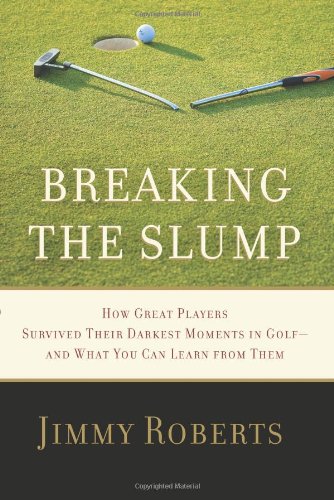
Breaking the Slump: How Great Players Survived Their Darkest Moments in Golf--and What You Can Learn from Them - PDF
نویسندگان: خلاصه: The nearly 37 million people in the United States who play golf probably all have one thing in common: At some point they have contemplated giving up the game because they were frustrated with the way they were playing. When those blissful moments of precise drives and perfect putts disappear, when the ball seems to have a mind of its own, and when well-grooved swings become totally unhinged, we find ourselves in that panicked state known as a "slump." When Jimmy Roberts, the award-winning reporter and writer, entered his own period of frustration with the game, he decided to ask some of the most famous golfers and successful people in the world for advice. Here, for the first time, are the stories and recollections of eighteen veteran players whose wisdom is both practical and philosophical. Some concentrate on technique (when Phil Mickelson is dissatisfied with the way he's driving the ball, he practices bunker shots to reinforce the most important element of the tee shot—rhythm). Others focus on mental adjustments (Davis Love III remembers his late father's essential advice when he's frustrated: Try less hard). With stories from greats Jack Nicklaus, Arnold Palmer, Johnny Miller, Dottie Pepper, Greg Norman, George Herbert Walker Bush, Paul Azinger, and many others, this is an emotional and spiritual first aid kit for anyone who plays the game and even those who don't. As the 41st president says, the way we handle adversities in golf can provide a template for how to handle the challenges in life: Golf lessons can sometimes be life lessons too. There may not be a universal cure-all, but there are many ways to recover from a debilitating slump.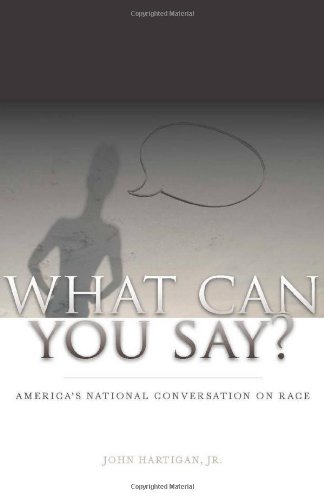
What Can You Say?: America's National Conversation on Race - PDF
نویسندگان: خلاصه: We are in a transitional moment in our national conversation on race. "Despite optimistic predictions that Barack Obama's election would signal the end of race as an issue in America, the race-related news stories just keep coming. Race remains a political and polarizing issue, and the sprawling, unwieldy, and often maddening means we have developed to discuss and evaluate what counts as "racial" can be frustrating. In What Can You Say?, John Hartigan Jr. examines a watershed year of news stories, taking these events as a way to understand American culture and challenge our existing notions of what is racial—or not.The book follows race stories that have made news headlines—including Don Imus's remarks about the Rutgers women's basketball team, protests in Jena, Louisiana, and Barack Obama's presidential campaign—to trace the shifting contours of mainstream U.S. public discussions of race as they incorporate new voices, words, and images. Focused on the underlying dynamics of American culture that shape this conversation, this book aims to make us more fluent in assessing the stories we consume about race. Advancing our conversation on race hinges on recognizing and challenging the cultural conventions governing the ways we speak about and recognize race. In drawing attention to this curious cultural artifact, our national conversation on race, Hartigan ultimately offers a way to to understand race in the totality of American culture, as a constantly evolving debate. As this book demonstrates, the conversation is far from over.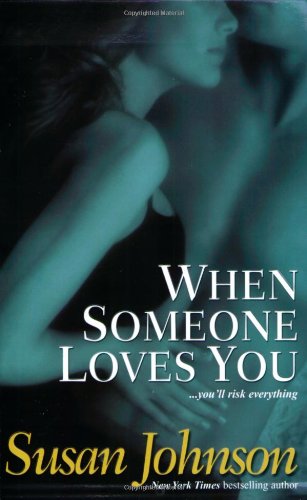
When Someone Loves You - Original PDF
نویسندگان: خلاصه: It was common gossip that "Duff" D'Abernon, Marquis of Darley, had returned from Waterloo a changed man. Gone was the reckless youth and in his place was a sullen recluse more interested in tending his horses than attending balls. But now the Marquis was entering the game again, openly flirting with the beautiful, witty, and thoroughly disreputable Annabelle Foster. Annabelle's no stranger to scandal. The actress-playwright is rumoured to have had liaisons with any number of powerful men, with an illegitimate daughter to show for it. She won't chance heartache again, even for a man as tempting as Duff D'Abernon. What she offers instead is a compromise: a true friendship between equals. Each agrees to the terms. A bargain is struck. And an idyllic summer begins. But what starts as friendship soon blossoms into searing passion. And the only thing worse than risking their hearts is not risking them at all...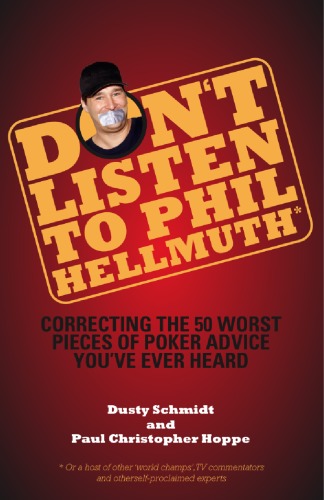
Don't Listen to Phil Hellmuth: Correcting the 50 Worst Pieces of Poker Advice You've Ever Heard - PDF
نویسندگان: خلاصه: What if many of the fundamental “truths” you’ve heardabout poker turned out to be false?Recognize any of these commonly held beliefs?• Preflop play doesn’t matter that much.• The key to getting paid off is playing looseso no one can put you on a hand.• Bigger 3-bets get more folds.• Calling is weak.• You have to bet this flop becauseyou don’t want to give up.There is certainly an element of truth to some of thesestatements, but by and large they are big misconceptions.Perhaps this shouldn’t bother us because, as poker pros, weprofit off the mistakes of others. But when we see so manyhigh-level players making so many fundamental mistakes intheir games, and having those moves endorsed by televisionannouncers, it’s enough to make us scream, “Stop! That’snot how it’s done!”This book focuses on correcting the greatest fallacies inpoker. There are an astonishing number of them, providingour common understanding of the game with an incrediblyshaky foundation. This did not come entirely as a surprise.Like many new players, we struggled to sift through allthe competing voices. One author would say this, anotherwould say that. For Dusty, it took more than 3 millionhands to generate an income that exceeded the sum totalof his bonuses.Hoping to give our readers a better leg up than wehad, we systematically take on what we recognize as flawedadvice. The two of us have combed through more than fourdecades of conventional poker wisdom. No one is spared:world champions, on-air commentators or other flavors ofthe month. Not even we are excluded from our criticism.One by one, we challenge each misconception, takingon what we feel are the top 50 ways to lose at poker. Byproving these misconceptions false, we think we benefit ourreaders in such a way that, by implementing these newfoundunderstandings, they can become more profitable tomorrow.We want this book to ultimately function as aFactCheck.org or “MythBusters” for poker. We hope you’llcome to look at us as watchdogs out to protect your interestsby questioning the powers that be.As we did in our previous books, Treat Your Poker LikeA Business and Way of the Poker Warrior, in this book wecover the game’s most frequent scenarios, seeking to providesolutions to situations that arise every 10 minutes rather thanonce a month. Our criteria for choosing misconceptions weresimple. Are they costing people money, and can we prove it?We hope to relate with our readers, letting them know thatthe scenario that’s vexing them now once did the same to us.Unlike our previous books, this is a comprehensivemanual that aims to troubleshoot the poker process fromthe top down, complete with hand analyses and a readerquiz at book’s end.The process of writing this book has led us to thinkabout coaching. Golfers don’t have 10 swing coaches.Baseball players don’t have 10 hitting coaches. Footballteams don’t have 10 offensive coordinators. But in poker,we tend to entertain advice from all comers, which leadsto confusion and a fragmented playing style. Why do wedo this?Profit motive.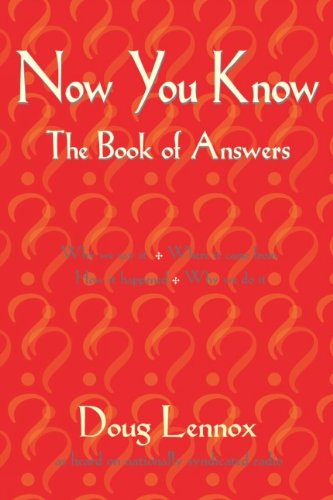
Now You Know - PDF
نویسندگان: خلاصه: Our daily lives are filled with little sayings and habits that we don't think much about. Many of them have their roots in history and were passed down from our ancestors, and though the reasons for them have often been forgotten, they linger still. Have you ever wondered:- Why is there a best man at weddings and why are brides carried over the threshold?- Why is an eager person "gung ho" and a coward "yellow"?- Why is football played on a "gridiron" and a leg injury called a "charley horse"?- Why do the British drive on the left and North Americans on the right?The answers to these questions and the origins of hundreds of other expressions and customs are brought together in this fascinating collection based on the nationally-syndicated radio feature "Now You Know," which reaches a daily audience of over a million Canadians. With all the conciseness of the original radio scripts, Doug Lennox tells you the things you always wanted to know.
Sea Creatures You Can Draw (Ready, Set, Draw!) - PDF
نویسندگان: خلاصه: Do you love colorful clownfish or smart stingrays? Whatever your favorite sea creature, you'll soon be drawing marine life like a pro with the help of this fun book. Just follow the steps and you'll have some great-looking ocean friends before you know it. Fact-filled descriptions accompany the drawings, so you can learn all about sharks, killer whales, and more. You'll also find tips on adding details to your drawing - like a beach ball for your dolphin or a seashell for your crab. So get out some paper and grab a pencil. Then get ready, get set, and get drawing!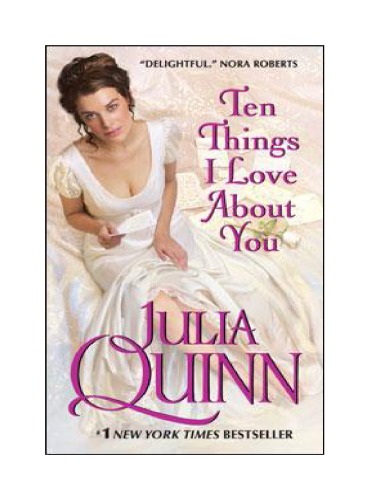
Ten Things I Love About You (Bevelstoke, Book 3) - PDF
نویسندگان: خلاصه: ―Annabel!‖Annabel snapped to attention. Louisa was addressing her with uncommon urgency, and she‘d dowell to listen.―Annabel, this is important,‖ Louisa said.Annabel nodded, and an unfamiliar feeling washed over her—maybe of gratitude, certainly oflove. She‘d only just got to know her cousin, but already there was a deep bond of affection, andshe knew that Louisa would do everything in her power to keep Annabel from making anunhappy alliance.Unfortunately, Louisa‘s power was, in this capacity, limited. And she did not—no, she couldnot—understand the pressures of being the eldest daughter of an impoverished family.―Listen to me,‖ Louisa implored. ―Lord Newbury‘s son died, oh, I think it must be a bit over ayear ago. And he started looking for a wife before his son was cold in his grave.‖―Shouldn‘t he have found one by now, then?‖Louisa shook her head. ―He almost married Mariel Willingham.‖―Who?‖ Annabel blinked, trying to place the name.―Exactly. You‘ve never heard of her. She died.‖Annabel felt her eyebrows rise. It was really a rather emotionless delivery of such tragic news.―Two days before the wedding she took a chill.‖―She died in only two days?‖ Annabel asked. It was a morbid question, but, well, she had toknow.―No. Lord Newbury insisted upon delaying the ceremony. He said it was for her welfare, thatshe was too ill to stand up in church, but everyone knew that he really just wanted to make sureshe was healthy enough to bear him a son.‖―And then?‖―Well, and then she did die. She lingered for about a fortnight. It was really very sad. She wasalways very kind to me.‖ Louisa gave her head a little shake, then continued. ―It was a near missfor Lord Newbury. If he‘d married her, he would have had to go into mourning. As it was, hehad already tried to wed scandalously soon after his son‘s death. If Miss Willingham hadn‘t diedbefore the wedding, he‘d have had another year of black.‖―How long did he wait before looking for someone else?‖ Annabel asked, dreading the answer.―Not more than two weeks. Honestly, I don‘t think he would have waited that long if he thoughthe could have got away with it.‖ Louisa looked about, her eyes falling on Annabel‘s sherry. ―Ineed some tea,‖ she said.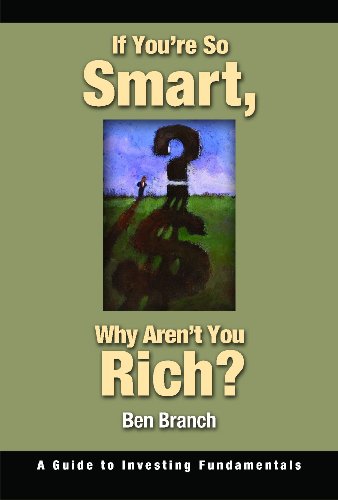
If You're So Smart, Why Aren't You Rich?: A Guide to Investing Fundamentals - PDF
نویسندگان: خلاصه: Football is often described as a game of inches. First downs, scoring, and in/out of bound decisions that can determine the outcome of the game may even come down to fractions of an inch. Investing is similar: the difference between outperforming or underperforming the market may be a few fractions of a percentage point. As Ben Branch succinctly states, successful investing, defined as outperforming the market averages, is not easy. And yet it is very much a game worth playing, particularly if you win. The key to being on the winning side is to understand the fundamental principles of investing—what it is and how it works—before making any decision. In this highly practical, non-technical guide, Branch introduces the reader to stocks, bonds, options, mutual funds, real estate, futures, and all of the other basic elements of the market. He debunks popular myths and misconceptions about investing and shows you how to avoid mistakes in order to invest wisely. An extensive glossary, definitions and examples, and lists of dos and don'ts will make this book a handy resource for the novice as well as for seasoned investors looking to take their game to the next level.In this highly practical, non-technical guide, Branch provides the building blocks of a multi-dimensional investing approach. First, he reviews the principle of compound interest, the foundation of all investment strategy and performance. Then, arguing that successful investing is a function of three types of activities—selection, timing, and execution—he introduces the reader to stocks, bonds, options, mutual funds, real estate, futures, and all of the other elements of the market. In addition to covering well-known investments in detail, he explains lesser-known opportunities, such as bankruptcies and takeovers. Special topics include the effects of macroeconomic trends and the subtleties of timing for maximum advantage. He debunks popular myths and misconceptions about investing and shows you how to avoid mistakes in order to invest wisely. An extensive glossary, definitions and examples, and lists of dos and don'ts will make this book a handy resource for the novice, as well as for seasoned investors looking to take their game to the next level.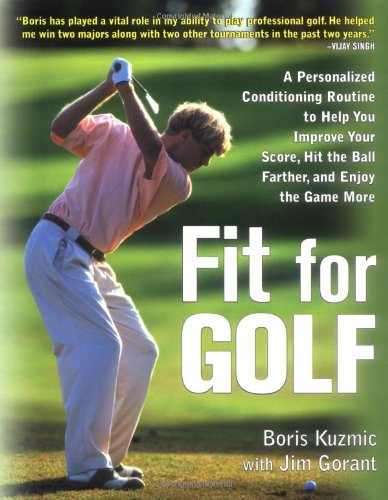
Fit for Golf : How a Personalized Conditioning Routine Can Help You Improve Your Score, Hit the Ball Further, and E - PDF
نویسندگان: خلاصه: Ever since Tiger Woods exploded onto the golf scene and attributedpart of his success to daily workouts, physical fitness has become one ofthe fastest-growing areas of interest for golfers. Tiger worked out hard,even on the days he played. This was unheard of on the PGA Tour.Before Tiger, a few golfers did pay attention to physical fitness—mostnotably Gary Player—but most of them weren’t consistent and didn’treally do the kind of work that would make a difference in their play. Twoand half years later, after Tiger had conquered the golf world, the work-out facilities at every PGA stop were jammed with players every day.These guys suddenly realized that if they wanted to keep up with the bestthey could no longer focus solely on swing planes and putting strokes.The same is true for the rest of us: to play better golf, we need toimprove every aspect of our games and our bodies. I’m a former profes-sional golfer who went on to become the personal trainer for eleven PGATour players—David Duval, Ernie Els, Vijay Singh, Jesper Parnevik,Robert Allenby, Tom Pernice Jr., Gabriel Hjertstedt, Gary Nicklaus,1Copyright © 2004 by The McGraw-Hill Companies, Inc. Click here for terms of use.Tommy Armour, Brad Fabel, and Tim Herron. While working with me,five of them were ranked among the top twenty golfers in the world.Although working out is great for the pros, it may do even more forthe amateur golfer. By following a well-designed fitness and nutritionprogram like the ones in this book, you can expect to:hit the ball farthergain control over your swingimprove your flexibility and range of motionincrease your stamina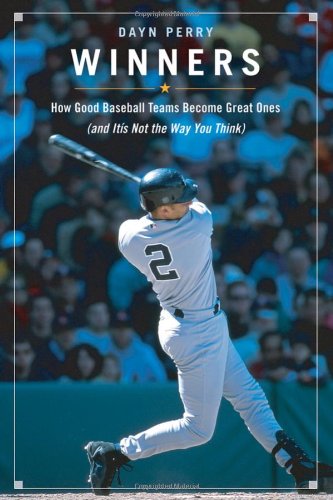
Winners: How Good Baseball Teams Become Great Ones (And It's Not the Way You Think) - Original PDF
نویسندگان: خلاصه: our team is a loser.They’re not irredeemably awful—they have a handful of elite per-formers, and there are worse clubs. But your team isn’t within hail-ing distance of the truly great teams of the day. They’re graced withthe odd All-Star and what seems to be a spare menagerie of haphaz-ardly identified prospects, but your team’s high command does a poorjob of filling out the roster and navigating the club through the treach-erous shoals of the late season. They either mindlessly adhere to thetactical approaches of the past or, on occasion, fecklessly ape the strat-egy du jour. They misread the markets, judge hitters with flawed met-rics, and fail to covet repeatable skills in pitchers. So they lose. Andthey lose.You may have picked up this book because you’d like to be a bet-ter fan, a better unpaid organizational watchdog. You’d like to knowwhat your team can learn from the winners of the recent past. You’dlike to know what they’ve got that your team doesn’t.The book in your hands attempts to answer the following queries:How do baseball teams win? More specifically, what things are impor-tant? What do they tend to excel at? What do they tend to ignore? Inessence: How’d they do that?1IntroductionTo cobble together answers to these questions, I’ve examined eachteam to make the postseason between 1980 and 2003, with the 1981and 1994 seasons excluded. I’m excluding those years because theyculminated like no two other seasons in baseball. In 1981, a players’strike forced the season to be truncated to a total of just more than 100games per team. Because MLB decided to determine the playoff poolbased on first-half and second-half division winners—a patently sillydecision—teams such as the Cardinals and the Reds, who had the twobest records in the NL that season, were left out despite meriting inclu-sion. So to include playoff teams from the ’81 season in my researchwould be to pollute the sample with teams that weren’t really playoffteams. As for the 1994 season, labor troubles once again fouled up theprocess, except this time no playoffs at all occurred. However, evenwith those two seasons left out of the calculus, 124 playoff teamsremain, and it’s those teams and what they did to be successful, toreach the wilder shores of October, that drive this book.As for the 1980 cutoff date, I think it’s more instructive to keep thefocus on recent history. Even so, since 1980 the vicissitudes of the gamehave allowed us to see an array of organizational styles and tacticalapproaches employed by great teams. That affords us a look at thestrains of greatness that have persisted over the past quarter century orso, despite broad and frequent changes to the playing environment.To divine what’s important and what’s not important to winningteams, I’ve used statistics of all sorts. First, know this: I’m a formerhumanities major who for many years had math skills that could becharitably characterized as tutor-worthy. So I’m not going to sail overanyone’s head with all things quantitative. From time to time I’ll wieldsome scary-sounding metrics, but they’ll be explained, and along theway I’ll also explain why they’re superior to the baseball stats you’reused to seeing. If you like, think of these statistics as an ideological coun-terweight to the stuff that’s on the backs of baseball cards. But moreoverthink of them as tools that help tell the stories of these great teamsآیا کتاب مورد نظر هنوز بر روی سایت قرار نگرفته است؟ جای نگرانی نیست! کافی است بر روی گزینه سفارش کتاب کلیک کرده و درخواست خود را ثبت کنید. در کمتر از چند ساعت کتاب شما را آماده خواهیم کرد.