دانلود کتاب Designing the User Interface: Strategies for Effective Human-Computer Interaction, Global Edition 6th edition
توضیحات کتاب :
Brand New
سرچ در وردکت | سرچ در گودریدز | سرچ در اب بوکز | سرچ در آمازون | سرچ در گوگل بوک
2,400 بازدید
Brand New
سرچ در وردکت | سرچ در گودریدز | سرچ در اب بوکز | سرچ در آمازون | سرچ در گوگل بوک
2,400 بازدید

ضمانت بازگشت

فایل های تست شده

پرداخت آنلاین

تضمین کیفیت

دانلود فوری
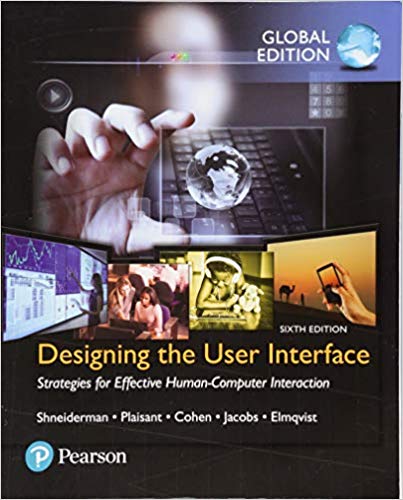
For courses in Human-Computer Interaction The Sixth Edition of Designing the User Interface provides a comprehensive, authoritative, and up-to-date introduction to the dynamic field of human-computer interaction (HCI) and user experience (UX) design. This classic book has defined and charted the astonishing evolution of user interfaces for three decades. Students and professionals learn practical principles and guidelines needed to develop high quality interface designs that users can understand, predict, and control. The book covers theoretical foundations and design processes such as expe
برای دورههای تعامل انسان و رایانه، ویرایش ششم طراحی رابط کاربری مقدمهای جامع، معتبر و بهروز در زمینه پویایی تعامل انسان و رایانه (HCI) و طراحی تجربه کاربر (UX) ارائه میکند. . این کتاب کلاسیک تکامل شگفتانگیز رابطهای کاربری را برای سه دهه تعریف و ترسیم کرده است. دانشآموزان و متخصصان اصول عملی و دستورالعملهای مورد نیاز برای توسعه طراحیهای رابط با کیفیت بالا را میآموزند که کاربران بتوانند آن را درک، پیشبینی و کنترل کنند. این کتاب مبانی نظری و فرآیندهای طراحی مانند expe
را پوشش می دهد
ادامه ...
Ebook details:
عنوان: Designing the User Interface: Strategies for Effective Human-Computer Interaction, Global Edition
نویسنده: Catherine Plaisant (author), Maxine Cohen (author), Steven Jacobs (author), Niklas Elmqvist (author), Nicholas Diakopoulos (author) Ben Shneiderman (author)
ناشر: English
زبان: 9781292153919
شابک: 978-1292153919, 1292153911
حجم: 137 Mb
فرمت: True Pdf
Cover; Title Page; Copyright Page; Preface; Acknowledgments; About the Authors; Brief Contents; Contents; Preface; About the Authors; Part 1: Introduction; Chapter 1: Usability of Interactive Systems; 1.1. Introduction; 1.2. Usability Goals and Measures; 1.3. Usability Motivations; 1.4. Goals for Our Profession; Chapter 2: Universal Usability; 2.1. Introduction; 2.2. Variations in Physical Abilities and Physical Workplaces; 2.3. Diverse Cognitive and Perceptual Abilities; 2.4. Personality Differences; 2.5. Cultural and International Diversity; 2.6. Users with Disabilities 2.7. Older Adult Users2.8. Children; 2.9. Accommodating Hardware and Software Diversity; Chapter 3: Guidelines, Principles, and Theories; 3.1. Introduction; 3.2. Guidelines; 3.3. Principles; 3.4. Theories; Part 2: Design Processes; Chapter 4: Design; 4.1. Introduction; 4.2. Organizational Support for Design; 4.3. The Design Process; 4.4. Design Frameworks; 4.5. Design Methods; 4.6. Design Tools, Practices, and Patterns; 4.7. Social Impact Analysis; 4.8. Legal Issues; Chapter 5: Evaluation and the User Experience; 5.1. Introduction; 5.2. Expert Reviews and Heuristics 5.3. Usability Testing and Laboratories5.4. Survey Instruments; 5.5. Acceptance Tests; 5.6. Evaluation during Active Use and Beyond; 5.7. Controlled Psychologically Oriented Experiments; Chapter 6: Design Case Studies; 6.1. Introduction; 6.2. Case Study 1: Iterative Design Evaluation of Automated Teller Machines (ATMs); 6.3. Case Study 2: Design Consistency at Apple Computer; 6.4. Case Study 3: Data-Driven Design at Volvo; 6.5. General Observations and Summary; Part 3: Interaction Styles; Chapter 7: Direct Manipulation and Immersive Environments; 7.1. Introduction 7.2. What Is Direct Manipulation?7.3. Some Examples of Direct Manipulation; 7.4. 2-D and 3-D Interfaces; 7.5. Teleoperation and Presence; 7.6. Augmented and Virtual Reality; Chapter 8: Fluid Navigation; 8.1. Introduction; 8.2. Navigation by Selection; 8.3. Small Displays; 8.4. Content Organization; 8.5. Audio Menus; 8.6. Form Fill-in and Dialog Boxes; Chapter 9: Expressive Human and Command Languages; 9.1. Introduction; 9.2. Speech Recognition; 9.3. Speech Production; 9.4. Human Language Technology; 9.5. Traditional Command Languages; Chapter 10: Devices; 10.1. Introduction 10.2. Keyboards and Keypads10.3. Pointing Devices; 10.4. Displays; Chapter 11: Communication and Collaboration; 11.1. Introduction; 11.2. Models of Collaboration; 11.3. Specific Goals and Contexts; 11.4. Design Considerations; Part 4: Design Issues; Chapter 12: Advancing the User Experience; 12.1. Introduction; 12.2. Display Design; 12.3. View (Window) Management; 12.4. Animation; 12.5. Webpage Design; 12.6. Color; 12.7. Nonanthropomorphic Design; 12.8. Error Messages; Chapter 13: The Timely User Experience; 13.1. Introduction; 13.2. Models of System Response Time (SRT) Impacts
ادامه ...۱- در صورت داشتن هرگونه مشکلی در پرداخت، لطفا با پشتیبانی تلگرام در ارتباط باشید.
۲- برای خرید محصولات لطفا به شماره محصول و عنوان دقت کنید.
۳- شما می توانید فایلها را روی نرم افزارهای مختلف اجرا کنید(هیچگونه کد یا قفلی روی فایلها وجود ندارد).
۴- بعد از خرید، محصول مورد نظر از صفحه محصول قابل دانلود خواهد بود همچنین به ایمیل شما ارسال می شود.
۵- در صورت وجود هر مشکلی در فرایند خرید با تماس بگیرید.